
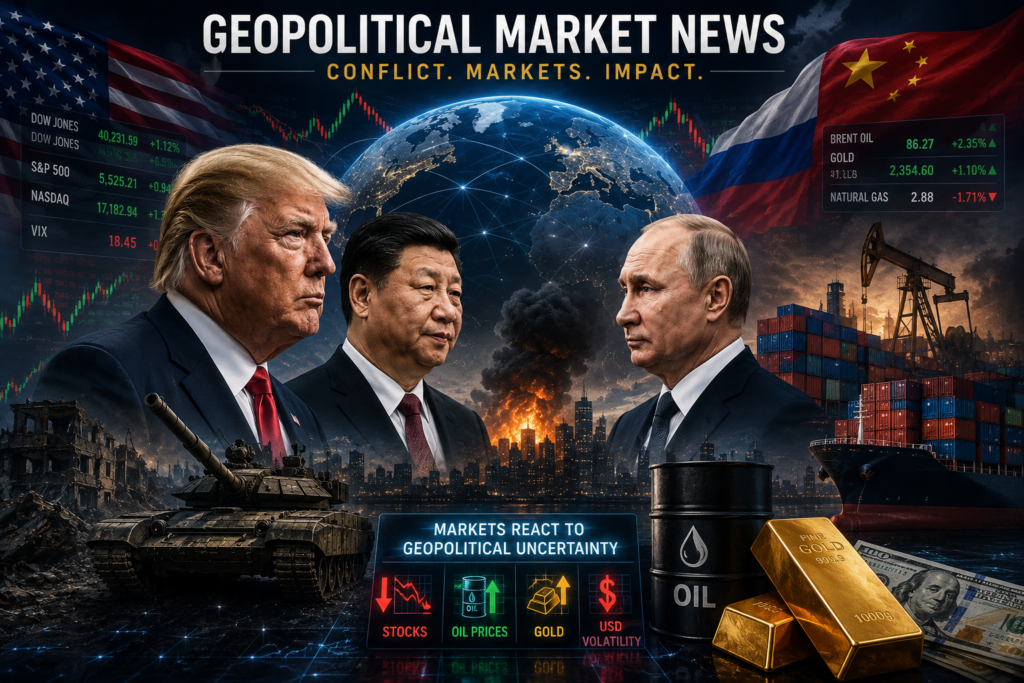
Geopolitical Market Analysis: July 21, 2026
Executive Summary
Global markets are navigating a complex mix of geopolitical escalation in the Middle East, renewed U.S. trade tensions with Canada, rotation out of overheated AI/tech sectors, and resilient but cautious investor sentiment. U.S. equities closed mixed-to-lower on July 20, with the S&P 500, Dow Jones, and Nasdaq all showing modest declines or flat performance. Chip and AI stocks showed tentative recovery after sharp recent losses, while oil prices remain elevated amid ongoing tensions.
Key drivers include conflict risks in the Strait of Hormuz, new U.S. tariffs on Canada, cooling inflation signals, and uncertainty around Federal Reserve policy. Gold continues to reflect safe-haven demand at elevated levels.
1. Middle East Geopolitics: U.S.-Iran Tensions and the Strait of Hormuz
The dominant risk factor is the fragile situation between the U.S. and Iran. A June memorandum of understanding aimed to de-escalate and restore shipping flows, but repeated tit-for-tat strikes, attacks on vessels, and retaliatory actions have tested the truce. Traffic through the Strait of Hormuz — which handles a significant portion of global oil and LNG — has faced disruptions, rerouting, and lower volumes.
Oil Market Impact: Brent and WTI prices have spiked on supply disruption fears, recently trading in the mid-to-high $80s after reaching one-month highs. While prices have pulled back modestly on hopes of dialogue, they remain highly sensitive to any escalation or major shipping incident. Sustained disruptions could push prices significantly higher, adding a persistent risk premium to energy markets.
This environment supports energy and defense sectors while pressuring broader consumer and growth-sensitive areas through higher input costs.
2. U.S.-Canada Trade Escalation
President Trump recently imposed 50% tariffs on a range of Canadian exports, including wine, hockey equipment, cement, and certain dairy-related items. These measures, set to take effect in mid-August, respond to alleged discrimination against U.S. goods in autos, dairy, and alcohol sectors. Key exemptions apply to energy, critical minerals, and potash.
Market Implications: The tariffs are targeted rather than blanket, limiting immediate broad-market impact. However, they heighten uncertainty in cross-border supply chains (particularly autos) and signal continued U.S. protectionism. This could invite retaliation and contribute to global trade fragmentation.
3. Equity Markets: AI Rotation and Sector Divergence
U.S. stocks have pulled back from recent peaks, driven by a notable selloff in chip and AI-related names amid concerns over valuations and potential slowdowns in capital spending. Some rebound occurred in key semiconductor stocks, but megacap tech showed mixed results, with rotation into other sectors evident.
Broader indices sit near recent lows but remain well above longer-term levels. Global markets echo this pattern, with AI-exposed names in Asia facing pressure alongside tentative recoveries elsewhere. Cooling inflation data offers some support, though geopolitical and energy risks limit upside.
4. Fixed Income, Currencies, and Commodities
- Treasuries: The 10-year yield has held around 4.59%, reflecting a balance between growth concerns, inflation risks, and safe-haven flows.
- U.S. Dollar: The DXY index remains steady near 100–101, bolstered by its safe-haven role.
- Gold: Prices stay elevated near $4,000 per ounce, serving as a hedge against geopolitical uncertainty and inflation risks.
- Other Commodities: Energy prices are firm; agricultural and industrial metals show mixed performance.
Outlook and Risks
Supportive Factors: Recent declines in inflation could allow the Federal Reserve to maintain a flexible policy stance. The long-term AI growth narrative remains intact for many investors, and any meaningful de-escalation in the Middle East would remove a significant risk premium.
Key Risks:
- Further escalation in the Strait of Hormuz, leading to sustained high oil prices and broader inflation pressure.
- Expansion of trade disputes, raising costs and disrupting supply chains.
- Accelerated reset in technology valuations if upcoming earnings disappoint.
- Ongoing macroeconomic uncertainty from mixed data.
Markets demonstrate underlying resilience but remain sensitive to headlines. Geopolitical developments, particularly around energy chokepoints and trade policy, will likely drive near-term volatility. Investors should prioritize diversification, maintain hedges where appropriate, and closely monitor fast-evolving events in the Middle East and on the trade front.
This environment favors a cautious yet opportunistic approach, with attention to sector rotations and risk management.
This analysis is for informational purposes only and does not constitute investment advice. Always conduct your own research and consult professionals.