
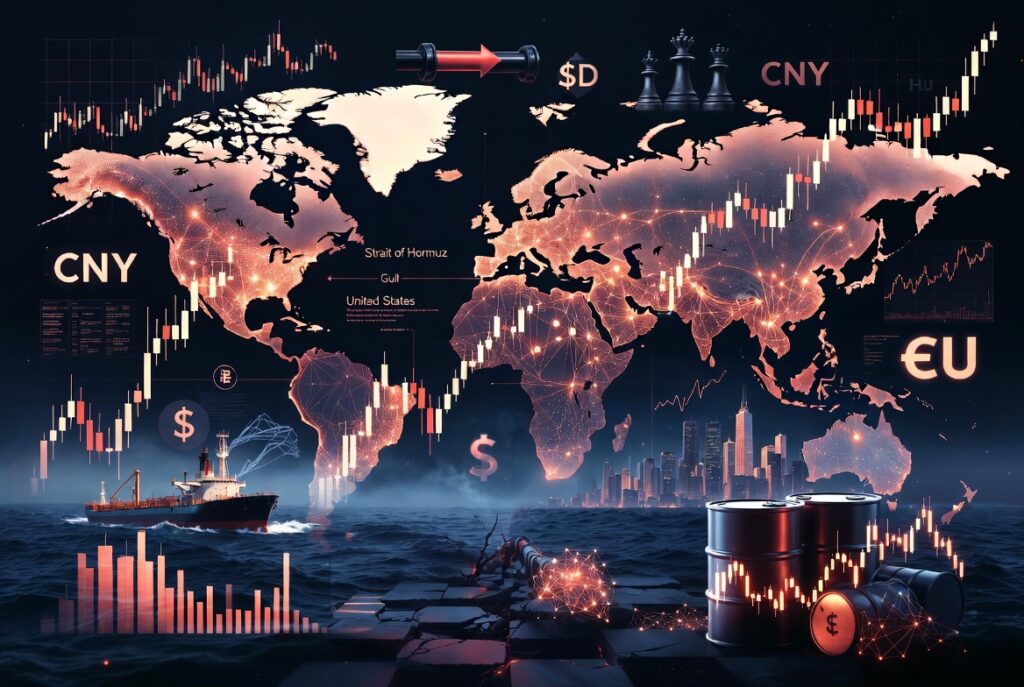
Geopolitical Market Analysis: July 20, 2026 – Volatility Persists Amid Middle East Tensions and Tech Sector Pressures
Global financial markets entered the week on a cautious note following a risk-off session on Friday. Investors are navigating renewed geopolitical flare-ups in the Middle East, concerns over AI-related spending and valuations, and mixed economic signals. While energy sectors found support from elevated oil prices, technology and semiconductor stocks faced heavy selling pressure.
Market Snapshot
Major US indices closed lower on Friday, with the S&P 500 declining around 1%, the Nasdaq-100 dropping nearly 1.5%, and the Dow Jones slipping about 0.8%. Communication services, consumer discretionary, and technology led the declines, while energy was the sole gaining sector. The semiconductor space is nearing bear market territory after a sharp pullback from recent highs.
European markets closed mostly lower, though the FTSE 100 showed modest gains on strength in utilities and energy names. In Asia, performance was mixed: some indices like the Hang Seng and Nifty posted gains, while others such as the Shanghai Composite saw significant declines.
Oil prices have climbed amid ongoing tensions, providing a tailwind for energy-related assets. Bond yields remain elevated, reflecting persistent inflation concerns and policy uncertainty.
Geopolitical Drivers: Middle East Tensions Dominate
The dominant theme is the continued volatility stemming from US-Iran hostilities and disruptions around the Strait of Hormuz. Recent strikes, attacks on shipping and infrastructure, and escalatory statements have heightened risks to global energy flows. Although some tanker traffic has recovered from earlier lows, the situation remains fragile, with potential for further interruptions.
This geopolitical environment has kept oil prices elevated, supporting energy producers but raising inflation worries for import-dependent economies. Broader global trends of fragmentation, reshoring supply chains, and strategic competition over critical resources—including energy, semiconductors, and minerals—continue to shape long-term market dynamics. Europe’s heavy reliance on imported energy leaves it particularly exposed, while export-oriented Asian economies show some resilience through diversification.
Regional and Sectoral Analysis
United States: The economy demonstrates underlying resilience driven by massive investments in technology and artificial intelligence. However, markets are becoming more selective, with rotation away from overvalued tech names. Energy benefits directly from higher oil prices, while defensive sectors provide some stability amid uncertainty.
Europe: Growth remains challenged by energy costs and slower momentum. Recent inflation moderation offers some relief, but geopolitical risks complicate monetary policy decisions. Strength in energy and utilities has helped certain indices outperform peers.
Asia: Performance varies across the region. Domestic pressures weigh on some markets, while others benefit from export strength and selective technology exposure. China continues to navigate structural challenges alongside opportunities in global trade shifts.
Commodities, Currencies, and Policy Backdrop
Oil volatility stands out as the key commodity factor, with prices sensitive to any changes in Middle East developments. Safe-haven assets like gold see intermittent demand during risk-off periods, and the US dollar often strengthens on geopolitical flows and interest rate differentials.
Central banks face a complex balancing act: managing supply-shock inflation risks from geopolitics while assessing the growth potential from AI-driven productivity. Yields have reset higher across many markets, signaling expectations of tighter policy for longer in response to persistent pressures. Global growth remains moderate overall, with notable divergences between regions—stronger performance in the US contrasted by headwinds elsewhere.
Outlook and Key Risks
Near-term market direction hinges on developments in the Middle East. De-escalation could ease oil pressures and support broader risk appetite, allowing AI investment themes to regain momentum. Conversely, renewed disruptions could push energy prices higher, fuel inflation, and weigh on growth.
Investors should watch shipping activity through critical chokepoints, upcoming inflation and earnings data, and diplomatic signals. In this environment of overlapping shocks and de-globalization, diversification across asset classes, sectors, and geographies is crucial. Opportunities exist in energy, selective technology beneficiaries, and assets positioned for a more fragmented world order.
The interplay of geopolitics, energy markets, and technological transformation will likely define market performance in the coming months. Agility remains essential as events unfold rapidly.
This analysis is for informational purposes only and does not constitute investment advice. Always conduct your own research and consult professionals.