
In-Depth Geopolitical and Market Analysis: August 6, 2026
As of Thursday, August 6, 2026, global attention remains fixed on a fragile diplomatic opening in the Middle East that could reshape energy markets, alongside persistent attrition in Ukraine, unresolved tensions in Gaza, and mixed signals from equity and commodity markets. Optimism over potential progress on the Strait of Hormuz has supported risk assets in recent sessions, but underlying military realities, depleted inventories, and cautious investor positioning underscore the limits of any near-term resolution.
Geopolitical Landscape
The Iran Conflict and Strait of Hormuz Negotiations
The dominant story is the ongoing U.S.-Iran confrontation and efforts to reopen the Strait of Hormuz, a chokepoint that normally handles roughly one-fifth of global oil trade. Iran’s foreign ministry announced progress with Oman on a proposed shipping route, covering technical, legal, security, and environmental aspects. Draft language circulating among parties reportedly envisions Iranian control or oversight of inbound commercial shipping through the strait (with outbound arrangements still under discussion). Iran has linked any reopening to the end of the U.S. naval blockade of its ports and has discussed service or environmental fees (Iran seeking higher percentages of cargo value; Oman lower; the U.S. preferring none).
U.S. President Donald Trump has described discussions as “very good” and suggested a deal could come soon, while Iranian officials have denied direct negotiations with Washington and stressed that any understanding would not immediately make the strait fully safe. Mediators including Qatar, Oman, and Pakistan are active. Reports indicate the U.S. has drawn down a large share of its high-precision long-range missiles and interceptors during the conflict, raising concerns about deterrence capacity against other adversaries.
Houthi attacks on Saudi oil tankers continue, adding another layer of Red Sea and Gulf risk. A durable Hormuz arrangement would ease energy supply fears and inflationary pressures; failure or renewed strikes would reverse recent oil-price declines and heighten broader regional escalation risks, including threats to Gulf infrastructure.
Ukraine-Russia War
Russian missile and drone strikes on Kyiv and surrounding areas killed at least 17 people and wounded dozens. Ukraine continues limited drone operations against Russian territory. The European Union announced the release of €1.4 billion in profits from frozen Russian assets to support Ukraine. Air-defense shortages on the Ukrainian side remain a structural vulnerability. The conflict shows no near-term diplomatic off-ramp, keeping European energy and security concerns elevated.
Gaza and Broader Middle East
Israeli Prime Minister Benjamin Netanyahu has reiterated that Israel will not withdraw from current lines in Gaza until Hamas fully disarms, pushing back against elements of a U.S.-backed plan associated with President Trump. Talks involving Israel and Lebanon continue in Rome under U.S. facilitation. Humanitarian and military dynamics in Gaza remain highly constrained.
Other Notable Developments
- U.S. domestic politics: Progressive candidate Abdul El-Sayed narrowly won Michigan’s Democratic Senate nomination.
- India-Bangladesh relations strained after deposed Bangladeshi leader Sheikh Hasina’s press conference in New Delhi.
- A drone incident at Germany’s Leipzig/Halle airport near a Ukrainian cargo plane prompted security measures and flight diversions.
- Broader Indo-Pacific and other flashpoints (Taiwan, South China Sea) remain secondary for the moment as Middle East and Ukraine dominate bandwidth.
Market Analysis
Equities
U.S. stocks closed mixed on August 5. The Dow Jones Industrial Average rose about 0.5% to a record close near 54,349, supported by hopes of Middle East de-escalation and strong results from names such as Disney and Eli Lilly. The S&P 500 slipped roughly 0.2% from recent highs to around 7,723–7,724 after touching fresh records earlier. The Nasdaq Composite fell about 0.8% to near 26,363, pressured by technology and AI-related names.
SpaceX shares plunged approximately 13–14% after its first public earnings report showed strong revenue growth but heavy capital expenditure plans for AI infrastructure; lock-up expirations added pressure. AMD declined around 7% despite solid results, partly on commentary about Nvidia chip preferences at SpaceX. Asian markets were softer on Thursday, with tech weakness (Korea, Japan) following the U.S. session. Indian equities showed resilience early, aided by the RBI holding rates steady for a fourth meeting while monitoring energy-cost pass-through.
Sentiment has been buoyed by the prospect of lower oil prices and reduced inflation risk from a Hormuz deal, but investors remain wary of repeated false starts in Middle East diplomacy and elevated AI-related capital spending.
Commodities and Energy
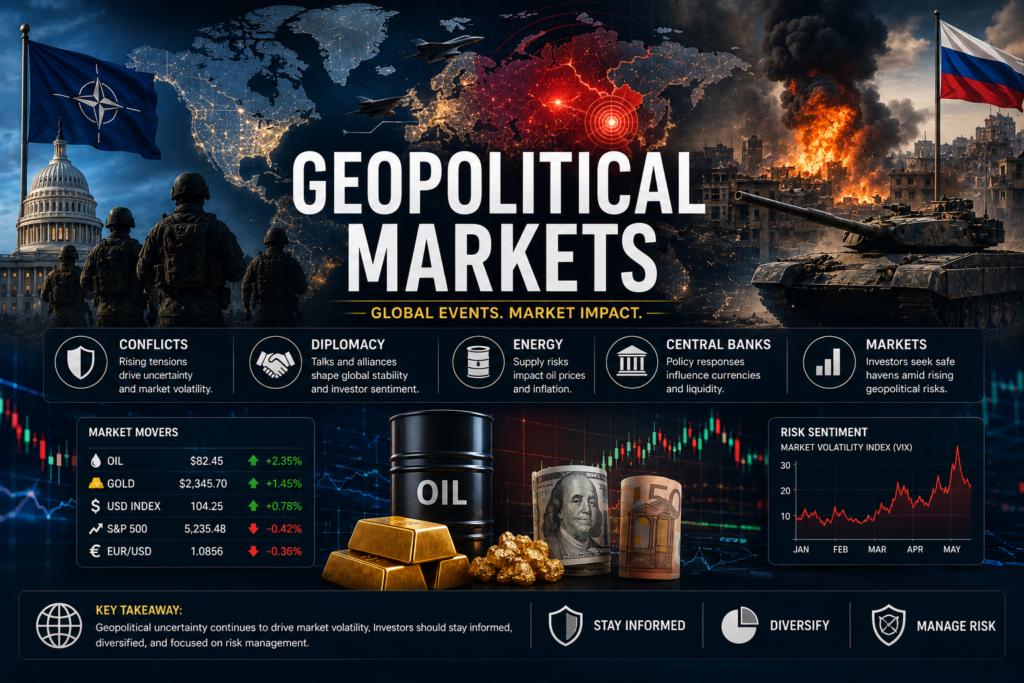
Oil prices have retreated significantly from conflict peaks on deal hopes. Recent levels show WTI crude around the mid-to-high $70s and Brent near $79. Prices remain sensitive to every diplomatic headline and any new attacks on shipping.
Gold has been a clear beneficiary of residual geopolitical risk and a softer dollar, rallying to multi-week or one-month highs in the $4,200–$4,300 range. Safe-haven demand, lower oil (easing some inflation fears), and positioning ahead of U.S. jobs data have supported the metal. Silver and other precious metals have also advanced.
Central Banks and Macro Backdrop
The RBI held policy rates, citing the need for clarity on energy-driven inflation. The ECB previously kept rates unchanged while signaling vigilance on energy shocks, with markets still pricing potential further tightening. U.S. Federal Reserve rates remain in the mid-3% range; upcoming nonfarm payrolls data will influence September expectations. Lower oil would support a more dovish tilt if sustained; renewed conflict would do the opposite.
Interconnections and Outlook
Geopolitics and markets are tightly coupled through energy. A credible, enforceable Hormuz arrangement that restores shipping volumes without major Iranian operational control or high fees would likely push oil lower still, ease inflation pressures, support equities (especially rate-sensitive and consumer sectors), and reduce safe-haven demand for gold. Conversely, breakdown in talks, new U.S. or Iranian strikes, or Houthi escalation would reverse oil’s recent decline, pressure risk assets, and elevate gold further.
Ukraine’s grinding attrition continues to strain European budgets and energy security even as asset-profit transfers provide incremental support. Gaza remains a separate but regionally linked source of volatility. Depleted U.S. precision munitions stockpiles introduce a longer-term strategic constraint that markets have not fully priced.
Near-term watchpoints (next 48–72 hours and beyond):
- Concrete announcements or joint statements on Hormuz routing, fees, and enforcement.
- Any kinetic incidents in the Gulf or Red Sea.
- U.S. jobs data and its implications for Fed policy.
- Earnings follow-through in tech/AI after the SpaceX/AMD reactions.
- Russian strike intensity and Ukrainian air-defense capacity.
Overall, markets are pricing a cautious improvement in the Middle East energy corridor while remaining alert to the high probability of setbacks. The baseline remains elevated geopolitical risk premium, with oil and gold serving as the primary transmission channels to broader asset prices. Investors should position for continued volatility rather than a clean de-escalation narrative.
This analysis is for informational and educational purposes. Market conditions change rapidly—always conduct your own due diligence or consult a financial advisor.