
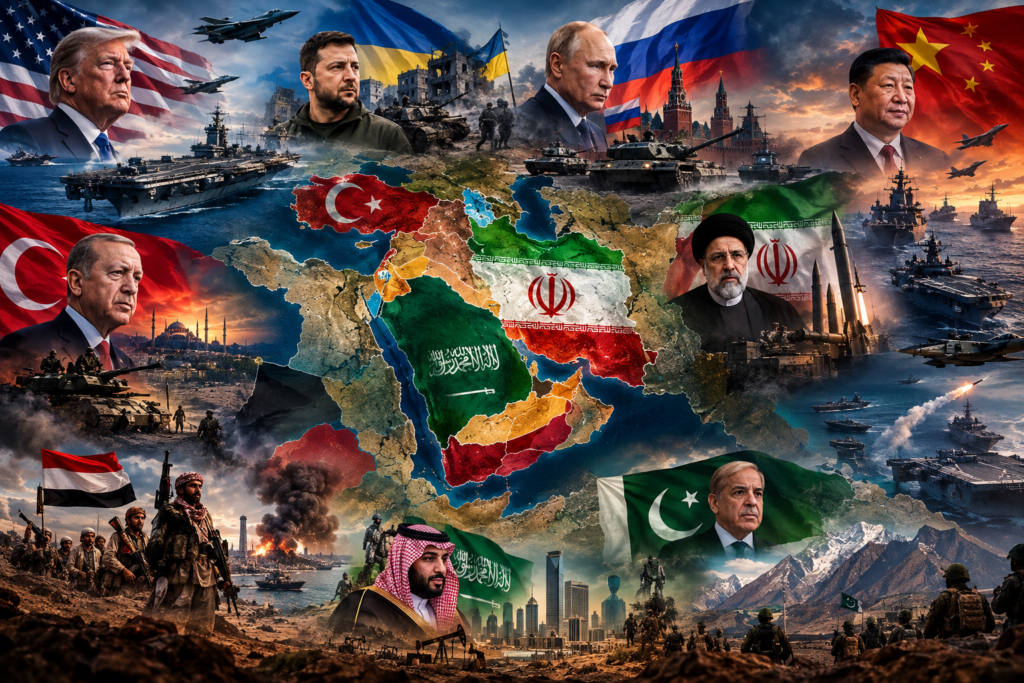
In-Depth Geopolitical and Market Analysis: October 15, 2026
Global markets and geopolitics remain tightly intertwined on this Thursday, with Middle East flashpoints continuing to dominate energy prices and inflation dynamics, while elevated US price pressures and AI-related financing concerns weigh on risk assets. The backdrop features persistent supply risks through critical maritime chokepoints, intensified proxy conflicts, and shifting great-power diplomacy under the Trump administration.
Middle East Escalation: Hormuz Disruptions and Houthi Expansion
The Strait of Hormuz crisis remains the primary geopolitical risk premium in energy markets. Iranian forces have intensified attacks on commercial shipping, with two cargo vessels—the Singapore-flagged container ship GFS Pride and the Antigua and Barbuda-flagged dry bulk carrier Cape Dao—sinking after projectile strikes near the waterway. Iran has hit more than a dozen vessels in recent weeks, framing the actions as responses to what it calls illegal transit routes. US forces have expanded air cover and monitoring to facilitate greater tanker throughput in an effort to ease global energy prices, yet the risk of further disruption to the roughly one-quarter of global seaborne oil trade that normally transits the strait remains elevated.
Concurrently, Iran-aligned Houthi forces in Yemen have broadened their campaign against Saudi Arabia. Strikes have targeted infrastructure including the Aramco complex in Dhahran (with reports of fire at an office tower) and areas near Riyadh, where intercepted missile debris has caused civilian injuries and property damage. Aviation operations at Riyadh’s King Khalid International Airport have faced suspensions, and the Houthis have claimed additional successes, including the downing of a Saudi Eurofighter Typhoon. Reports also indicate Houthi efforts to advance medium-range ballistic missile capabilities, potentially with foreign components, extending the threat radius across the peninsula and beyond.
These developments sustain a geopolitical risk premium in oil. Broader fears of regional escalation persist, with diplomatic efforts to reopen the strait showing limited near-term progress and US demands for Iranian compensation outstanding. Fertilizer shipping delays through the region add a secondary layer of concern for global food security.
Russia-Ukraine War: Infrastructure Strikes and Support Frictions
The conflict in Ukraine continues to impose energy and humanitarian costs. Russian ballistic missile and drone attacks have targeted Ukrainian power infrastructure, including a strike on a station in Kyiv’s Dniprovskyi District that left hundreds of thousands without electricity or heating and caused civilian casualties. Ukrainian leadership has criticized the assaults as disregard for any emerging truce frameworks.
Operational challenges have compounded the situation. Restrictions on high-speed satellite connectivity—linked to military-grade systems—have disrupted long-range drone missions, with Ukrainian officials highlighting throttled access and missing early warnings. These frictions occur against a backdrop of complex US-Russia energy discussions, including reported arrangements involving Russian diesel supplies, which have drawn scrutiny from allies concerned about sanctions consistency and strategic signaling.
Elsewhere, the Nord Stream sabotage trial continues in Germany, with proceedings examining the 2022 pipeline attacks, while North Korea has reiterated support for Russia.
Great-Power Diplomacy and Broader Flashpoints
US-China engagement remains active, with high-level visits and discussions spanning trade, technology, and regional issues including Iran. China’s strong export performance—driven by tech equipment, vehicles, and green technologies—has contributed to another substantial trade surplus trajectory, even as domestic demand stays relatively soft and producer prices have accelerated on commodity cost pass-through. EU policymakers are exploring additional trade tools to address imbalances.
Other developments include US statements on resource exploration in Greenland, Hungarian expulsion of Russian diplomats, and ongoing tensions around Taiwan contingency assessments. In Africa, Sudanese forces have reported territorial gains in West Darfur.
Stock Markets and Major Indices
US equities suffered a sharp sell-off on Wednesday following hotter-than-expected September CPI data (headline 3.7% year-over-year, core 2.6%), which revived expectations of tighter Federal Reserve policy. The S&P 500 closed at 7,718.94, down 1.11%, snapping a lengthy streak without a 1% decline. The Nasdaq Composite fell 1.88% to 26,692.87, pressured by technology and semiconductor shares—the Philadelphia Semiconductor Index dropped more than 4%, with notable weakness in AI-related names amid financing and debt concerns. The Dow Jones Industrial Average slipped a milder 0.09% to 51,621.48. Healthcare, consumer staples, and energy sectors provided relative outperformance.
European markets showed greater resilience on the day, with the FTSE 100 gaining 0.70% to 10,724.86, the CAC 40 up 0.58% to 7,873.11, and the DAX advancing 0.15% to around 25,298. Asia faced heavier pressure in early Thursday trading, tracking the US tech rout: the Nikkei 225 declined sharply (reports of 4–5% losses in some sessions), the Hang Seng edged lower, and the Kospi extended multi-session declines led by semiconductor giants. Broader global indices reflected the risk-off tone, though selective emerging markets showed mixed resilience.
The Russell 2000 entered correction territory after falling nearly 2%, highlighting vulnerability among smaller-capitalization stocks to higher-rate expectations.
Commodities
Energy markets remain the focal point of geopolitical influence. Brent crude eased more than 1% in early Thursday trade toward the mid-$104 range (recently around $104.40–$104.70) after settling near $106, while WTI traded near $94.00–$94.10, reversing prior gains. Prices continue to embed a risk premium from Hormuz attacks and Houthi strikes on Saudi facilities, balanced against higher output from Russia and the Gulf, US efforts to facilitate vessel flows, and International Energy Agency supply assessments. Natural gas showed modest strength, trading around $3.25–$3.28.Precious metals rebounded as the dollar softened from recent highs. Spot gold rose more than 1% to approximately $4,150–$4,160 per ounce after touching multi-day lows, supported by lower Treasury yields and scaled-back near-term rate-hike bets. Silver traded near $56, with platinum and palladium showing limited moves. Industrial metals such as copper declined modestly (around $6.56 per pound), reflecting broader growth and demand caution amid higher rates and energy costs. Agricultural commodities were mixed, with some grains under pressure.
Currencies
The US dollar initially surged on the hot inflation data, reaching an 18-month high on the dollar index (near 102.5), but partially retreated on Thursday as yields pulled back and Federal Reserve commentary tempered October hike probabilities. The index hovered around 102.0–102.2.
Major pairs reflected this volatility: the euro recovered toward $1.12 after earlier weakness near multi-month lows; sterling strengthened toward $1.32–$1.325 after dipping lower; and the Japanese yen improved modestly against the dollar (around 157.9–158). Commodity currencies faced mixed pressure, with the Australian dollar softer on domestic data. Safe-haven flows and rate differentials continue to dominate, with the greenback retaining underlying support from relatively higher US yields even as risk sentiment fluctuates.
Outlook
Near-term catalysts include further US economic data (PPI, retail sales, jobless claims), ongoing Middle East developments, any progress on Hormuz transit or energy truce talks, and corporate earnings from major technology and financial names. The interplay of supply-side geopolitical shocks and demand resilience (particularly from China and AI-related investment) suggests continued volatility across energy, equities, currencies, and rate-sensitive assets.
Investors should monitor chokepoint security, proxy escalation thresholds, and policy responses for signals on whether the current risk premium embeds sufficient buffer or remains prone to sharp repricing. This environment underscores the primacy of geopolitical risk management in portfolio construction, with energy security, supply-chain resilience, selective commodity and defense exposures, and careful currency hedging likely to remain key themes through the remainder of 2026.
This analysis reflects conditions as of early October 15th, 2026. The analysis is for informational and educational purposes. Market conditions change rapidly—always conduct your own due diligence or consult a financial advisor.