
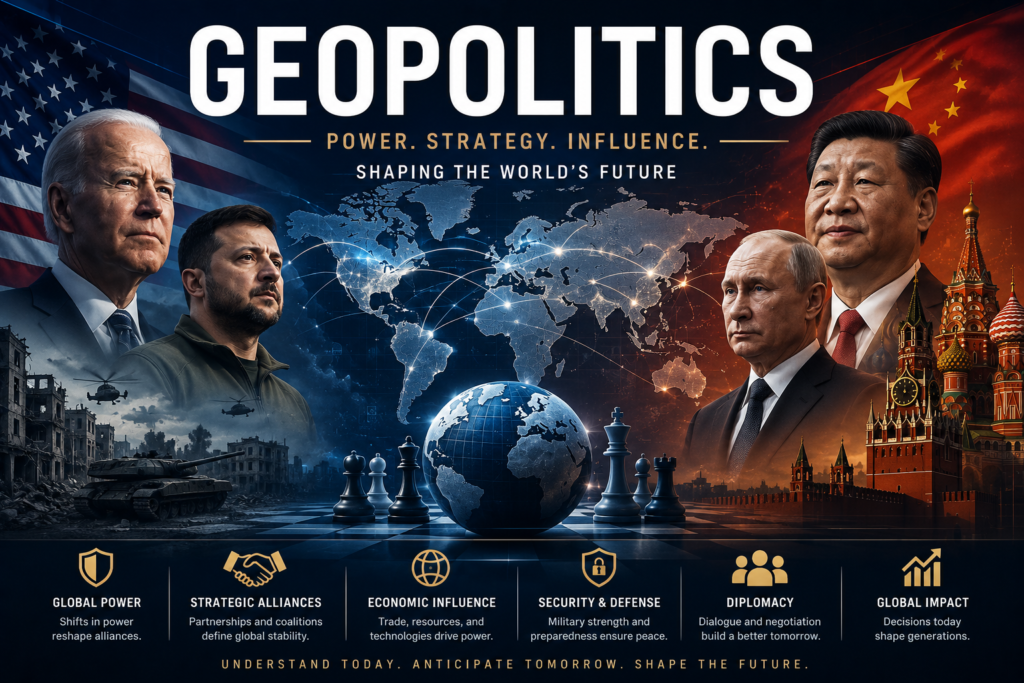
Geopolitical Market Analysis 2026: Power Shifts, Energy Shocks, and Investment Implications for a Fragmented World
Introduction
In mid-2026, the global economy operates under a persistent shadow of geopolitical friction. The dominant themes include the ongoing repercussions of the Iran conflict, managed but tense US-China competition, energy market volatility, and accelerating de-globalization trends. These forces are reshaping capital flows, commodity prices, currency valuations, and sector performance. This in-depth analysis examines the key dynamics, market impacts, and forward-looking implications for investors and businesses.
Major Geopolitical Drivers
1. The Iran Conflict and Middle East Energy Crisis
The 2026 escalation involving Iran, the US, and Israel has disrupted one of the world’s most critical chokepoints: the Strait of Hormuz. This has led to significant short-term shutdowns in oil and LNG exports, triggering sharp price spikes (Brent crude reaching peaks well above $110–120/bbl at times) and especially severe impacts on refined products like diesel and jet fuel. While partial reopenings, alternative routing, US export surges, and coordinated IEA stock releases have mitigated the worst outcomes, uncertainty remains elevated. The crisis has reinforced the push for energy diversification, accelerated renewable investments in Europe and Asia, and highlighted vulnerabilities in global supply chains. Nations are prioritizing redundancy over pure efficiency.
2. US-China Strategic Competition
Relations have entered a phase of “managed instability.” Summits have produced limited truces on tariffs and new bilateral dialogue forums, but core issues persist: technology controls, critical minerals, forced labor concerns, and reciprocal trade policies. Tariffs remain in place at elevated levels for many categories, though not at crisis peaks. China continues emphasizing self-reliance and Belt-and-Road expansion, while the US focuses on friend-shoring and supply chain resilience. This environment creates winners in alternative manufacturing hubs (Vietnam, India, Mexico) but raises costs and complexity for multinational corporations.
3. Russia-Ukraine and Broader Multipolarity
The protracted conflict continues to distort European energy markets and global food/commodity flows. Europe has largely weaned itself off Russian pipeline gas, boosting LNG imports and renewables. Defense budgets across NATO and allied nations have risen substantially, benefiting the aerospace and defense sector. Wider trends include weakening multilateral institutions, rising geoeconomic confrontation (top risk in global surveys), and competition for resources in the Arctic and elsewhere.
Macroeconomic Consequences
- Growth Outlook: Global GDP growth is projected to slow to the 2.5–3.1% range for 2026. Energy price shocks act as a headwind, particularly for importers, while AI productivity gains and targeted fiscal stimulus provide support in major economies. Emerging markets show divergence based on commodity exposure.
- Inflation Dynamics: Energy-driven price pressures have complicated central bank decisions. Some regions face renewed upside risks to inflation, delaying rate cuts or prompting tighter policy.
- Debt and Fiscal Pressures: High debt burdens limit maneuverability, especially in vulnerable emerging economies.
Market Impacts by Asset Class
Commodities
Energy markets remain the clearest transmission channel. Oil volatility has created opportunities for US shale and diversified producers but hurt importers. Gold has performed strongly as a safe-haven and inflation hedge amid currency diversification trends. Select industrial metals benefit from defense and tech demand.
Equities
Markets demonstrated resilience after initial sell-offs tied to Middle East headlines. Key rotations include:
- Strength in defense, energy (selective), and AI/tech leaders.
- Relative outperformance in value stocks and smaller companies during certain periods.
- International and emerging market equities offering diversification benefits when US assets face pressure.
Overall, corporate earnings resilience and AI enthusiasm have supported valuations despite geopolitical noise.
Currencies
The US dollar has faced headwinds from expected Fed easing and global diversification away from USD assets. The euro, pound, and yuan have shown selective strength. Currency volatility is elevated for commodity-sensitive and EM currencies.
Fixed Income
Higher inflation uncertainty has kept yields volatile. Government bonds in stable jurisdictions remain core holdings, while credit spreads reflect sector-specific risks.
Sector Themes and Opportunities
Beneficiaries
- Defense & Aerospace: Sustained budget increases globally.
- Energy Transition & Security: Renewables, LNG infrastructure, nuclear considerations.
- Resilient Supply Chain Companies: Those with diversified, friend-shored operations.
- Gold & Precious Metals Miners: Geopolitical and monetary hedges.
- AI & Productivity Enablers: Offsetting labor and energy constraints.
Risk Areas
- Highly energy-intensive industries without hedges.
- Pure-play global exporters facing tariff and fragmentation risks.
- Overexposed emerging markets with high debt and import dependence.
Outlook and Strategic Recommendations
Base Case: Gradual de-escalation in energy disruptions, continued managed competition between major powers, and a “muddling through” global economy supported by technology and policy adaptation. Equity markets likely deliver positive but volatile returns, with leadership shifting toward quality and thematic plays.
Key Risks: Renewed Hormuz closures, escalation in great-power tensions, or policy errors amplifying inflation.
Upside Surprises: Faster conflict resolution, stronger AI-driven growth, or commodity supply rebounds.
Actionable Insights for Readers
- Diversify — Reduce over-reliance on single regions or sectors.
- Hedge — Consider gold, commodities, and currency strategies.
- Build Resilience — For businesses: audit supply chains and scenario-plan for disruptions.
- Focus on Quality — Favor companies with strong balance sheets, pricing power, and structural tailwinds (AI, defense, energy security).
- Stay Agile — Geopolitical events create short-term volatility that often presents buying opportunities once initial panic subsides.
The world in 2026 is multipolar, interconnected, and tense. Geopolitics has moved from background risk to a primary driver of market outcomes. Success belongs to those who anticipate fragmentation, invest in resilience, and maintain disciplined, long-term perspectives amid the noise.
This analysis is for informational and educational purposes. Market conditions change rapidly—always conduct your own due diligence or consult a financial advisor.