Geopolitical Market Analysis: June 2, 2026
Executive Summary
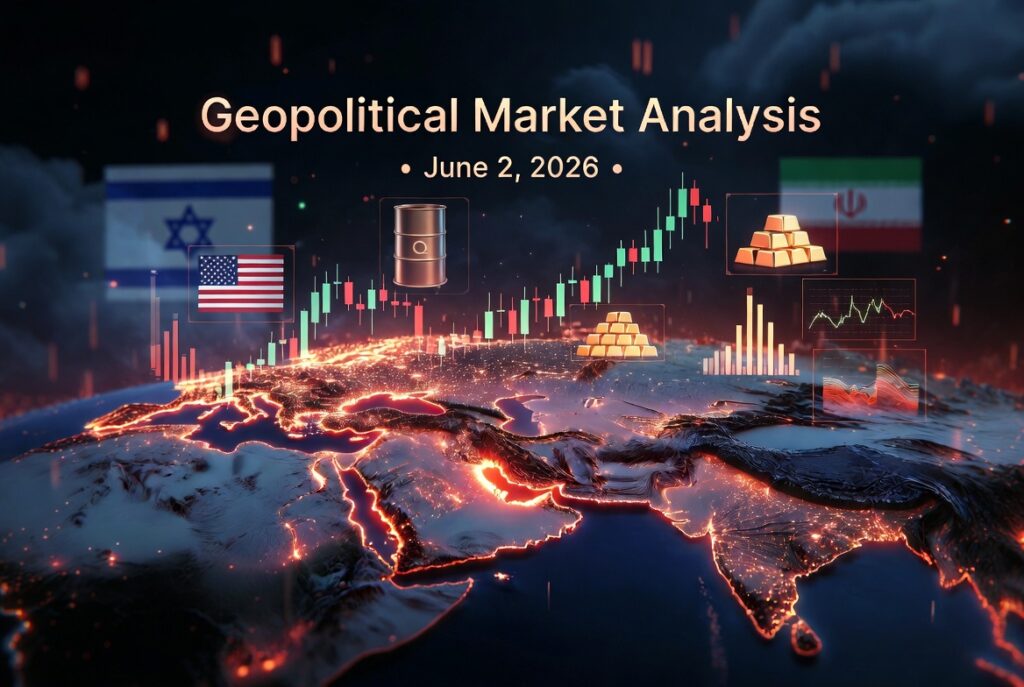
Global markets open Tuesday, June 2, 2026, with cautious optimism. Equity indices remain near record highs thanks to continued strength in AI and technology stocks, while commodity markets — especially oil and gold — reflect ongoing geopolitical tensions in the Middle East.The primary focus today is the volatile situation surrounding US-Iran ceasefire negotiations amid the 2026 Iran conflict. Investors are weighing hopes for de-escalation against the risk of prolonged supply disruptions.
Major Geopolitical Developments
- US-Israel-Iran Conflict: The conflict that escalated earlier in 2026 remains fluid. Ceasefire negotiations are underway but show mixed signals, with periods of optimism followed by setbacks. Any breakthrough or breakdown could significantly move markets.
- Strait of Hormuz Tensions: This critical waterway, through which roughly 20% of global oil passes, continues to face disruptions. Selective shipping, rerouting, and threats have tightened global oil supply and supported higher energy prices.
- Broader Risks: Great-power competition involving China, Russia, and the United States adds another layer of complexity. Diplomatic efforts, potential G7 developments, and other global events are being closely monitored.
Market Performance Snapshot (as of June 1 Close / Early June 2)
- Equities: US stock indices showed resilience. The S&P 500 and Nasdaq traded near all-time highs, supported by strong performance in technology and AI sectors. The Dow was relatively flat to modestly positive.
- Oil: Prices remain elevated and volatile. Concerns over supply disruptions in the Middle East have kept both WTI and Brent crude at high levels. Any positive ceasefire news could trigger a sharp pullback.
- Gold: Trading near recent highs as a safe-haven asset, reflecting investor caution amid geopolitical uncertainty.
- Bitcoin & Crypto: Showing relative stability and acting as a risk asset with some resilience in the current environment.
Sector and Asset Implications
- Energy Sector: Remains a clear beneficiary of sustained high oil prices. Exploration & production, oilfield services, and traditional energy companies are outperforming.
- Defense & Aerospace: Continued strength due to elevated geopolitical risk and military spending.
- Technology & AI: Still leading market gains, relatively insulated from direct Middle East impacts so far.
- Gold & Precious Metals: Attractive for portfolio hedging.
- Airlines & Transportation: Facing pressure from higher fuel costs.
- Consumer Discretionary & Industrials: More vulnerable to any prolonged spike in energy prices.
Outlook and Key Levels to Watch
Markets will remain highly sensitive to headlines from the Middle East. Positive developments on ceasefire talks could lead to a risk-on move (lower oil, higher equities), while escalation or renewed Strait of Hormuz issues would likely trigger a flight to safety (higher gold, lower stocks, spike in oil).Key levels to monitor:
- Oil price reaction (support/resistance around recent highs)
- US equity indices near record levels
- Gold as a barometer of risk sentiment
Bottom Line:
Geopolitical risk premium is still priced into the market. While the long-term trend for equities remains bullish on the back of AI and technological progress, near-term volatility is expected to stay high. Traders should stay nimble and keep a close eye on developments in Iran negotiations.