Geopolitical Market Analysis: Navigating Elevated Risk Premiums in Mid-August 2026
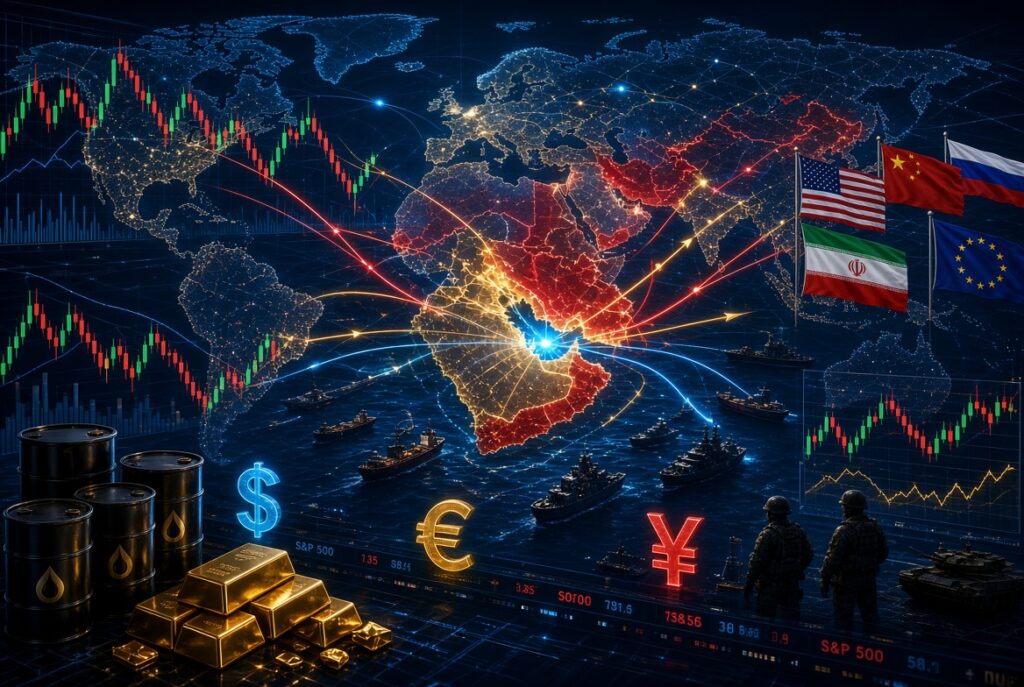
As of August 13, 2026, global financial markets are operating under a persistent geopolitical risk overlay dominated by the unresolved U.S.-Iran conflict and its impact on the Strait of Hormuz. This is layered with ongoing developments in the Russia-Ukraine war, evolving U.S. trade policy, and residual tensions elsewhere. Equities have shown resilience—particularly technology and AI-related names—supported by relatively benign U.S. inflation data, while energy and safe-haven assets continue to price a meaningful risk premium.
The Central Flashpoint: U.S.-Iran Standoff and the Strait of Hormuz
The conflict that escalated in late February 2026 remains the primary driver of market volatility. A June interim memorandum of understanding raised hopes for de-escalation and partial reopening of the Strait of Hormuz—through which roughly 20% of global oil supplies typically pass—but progress has stalled. As of mid-August, Iranian officials report no advancement on reviving the interim deal or setting implementation timelines. Tehran maintains that the waterway will remain restricted until U.S. conditions (including lifting the naval blockade of Iranian ports, ending regional threats, and addressing compensation claims) are met. Washington has countered with its own demands, including reparations, while asserting control over the strait—a claim Iran rejects.
Recent shipping incidents, including Houthi attacks and U.S. responses, have reinforced the risk premium. Brent crude has traded in a volatile range around the high $80s to low $90s per barrel in recent sessions, well above pre-conflict levels, while WTI has hovered in the low-to-mid $80s. Gold has traded near or above $4,380–$4,400 per ounce, reflecting safe-haven demand amid the uncertainty.
The economic scarring from earlier disruptions (including the largest oil supply shock in modern history at peak intensity) has been partially mitigated by strategic petroleum reserve releases, alternative routing, inventory draws, and demand adjustments—particularly lower Chinese imports at times. Full normalization of Hormuz throughput, however, remains elusive, keeping upside risk to energy prices skewed.
Secondary Geopolitical Pressures
Ukraine-Russia theater. Ukraine’s intensified long-range strike campaign against Russian energy and agricultural infrastructure continues. Recent attacks on grain terminals in Novorossiysk and oil facilities have disrupted exports and refining capacity, contributing to Russian fuel shortages and prompting Moscow to accuse Kyiv of inflating global food prices. This adds a secondary layer of commodity risk (grains, refined products) even as the broader war remains attritional.
Trade and policy uncertainty. U.S. tariff frameworks continue to evolve following earlier legal and legislative shifts. Potential new measures on partners (including Canada) and “structural excess capacity” investigations create ongoing uncertainty for supply chains and specific sectors. This interacts with the energy shock by reinforcing industrial policy and reshoring trends.
Other watchpoints. North Korean missile activity has periodically rattled Asian markets. Taiwan Strait and South China Sea tensions remain structural risks but are currently secondary to Middle East developments in terms of immediate market pricing. Broader multipolar shifts—BRICS dynamics, defense spending increases in Europe and elsewhere—continue to reshape long-term capital allocation.
Transmission Channels to Markets
Geopolitical risk is transmitting primarily through:
- Energy prices and inflation expectations — Elevated oil and gas support sticky inflation components and complicate central bank paths.
- Risk premia and volatility — Equity risk premiums remain elevated relative to pre-2026 levels; safe-haven flows support gold and, at times, the U.S. dollar or yen (subject to intervention).
- Supply-chain and shipping costs — Hormuz and residual Red Sea risks raise freight and insurance costs.
- Capital allocation and industrial policy — Defense, energy security, and critical minerals benefit structurally; energy-intensive and import-dependent economies face headwinds.
- Central bank reaction functions — Mild July U.S. CPI data (in line with expectations) has reduced near-term Fed hike probabilities, providing temporary relief to risk assets even as energy-driven inflation risks linger.
Asset-Class Implications (as of mid-August 2026)Energy and commodities. Oil retains a geopolitical floor. A durable Hormuz reopening could pressure prices lower over time (as seen in temporary relief phases), but incomplete resolution or renewed escalation keeps the upside skewed. Natural gas and refined products face similar dynamics; grains have shown sensitivity to Black Sea disruptions. Gold benefits from both geopolitical hedging and any shift toward easier monetary policy expectations.
Equities: The S&P 500 has demonstrated resilience (recently around 7,750 levels, with solid year-to-date gains driven heavily by AI/tech earnings and infrastructure spending). Leadership remains concentrated in technology and AI-related names, which have partially decoupled from pure geopolitical headlines. Energy-sensitive markets (Europe, India, Japan to varying degrees) and sectors face more pressure. Defense and cybersecurity continue to attract structural support. Emerging markets are mixed—commodity exporters may benefit from elevated prices, while energy importers face current-account and inflation headwinds.
Currencies and fixed income. The dollar retains a mixed safe-haven/interest-rate dynamic. Yen has seen intervention support earlier. Bond markets remain sensitive to inflation surprises and fiscal implications of higher defense and energy spending. Higher term premia are a recurring theme in elevated geopolitical regimes.
Scenarios and Near-Term Outlook
Base case (highest probability): Prolonged elevated uncertainty with intermittent diplomatic progress but no clean resolution of Hormuz access. Oil trades with a risk premium (range-bound but volatile in the $80–$100 zone depending on headlines). Equities grind higher on earnings and AI momentum but experience periodic drawdowns on escalation news. Inflation remains above pre-conflict targets for longer, limiting aggressive monetary easing.
Upside (de-escalation): Credible progress toward a durable framework reopening the strait more fully. Energy prices ease, growth outlook improves, risk assets rally more broadly, and gold may consolidate.
Downside (escalation): Breakdown of remaining diplomatic channels, wider shipping attacks, or significant infrastructure hits. Oil spikes, equity risk-off intensifies (especially outside the U.S./tech complex), and central banks face a more difficult growth-inflation trade-off.
Secondary risks (Ukraine energy/grain disruptions, tariff surprises, or Taiwan incidents) can amplify volatility but are currently lower-probability market movers than the Gulf standoff.
Investor Implications and Watchpoints
Markets have largely adapted to a “new geo paradigm” in which geopolitical shocks are structural rather than purely cyclical. Resilience has been notable, supported by corporate earnings strength (especially AI infrastructure) and policy buffers. However, the distribution of outcomes remains wide.
Key near-term catalysts to monitor:
- Any concrete announcements on Hormuz shipping protocols or U.S.-Iran mediated talks (including Oman’s role).
- Shipping incident frequency and insurance rate movements.
- U.S. inflation and labor data for Fed path clarity.
- Ukrainian strike effectiveness on Russian energy/agricultural capacity and any Russian responses.
- Tariff implementation timelines or trade negotiation updates.
- Corporate earnings commentary on energy costs, supply chains, and capex.
Positioning considerations (not advice): Maintain diversified exposure with tactical hedges in energy and gold; favor quality balance sheets and pricing power; overweight structural themes (AI infrastructure, defense, energy security/critical minerals) while remaining selective on pure energy-price beneficiaries versus cyclicals. Scenario analysis and position sizing remain essential given the binary potential of diplomatic breakthroughs or setbacks.
In summary, mid-August 2026 markets are pricing a messy, protracted geopolitical environment centered on the Gulf. Equity resilience has so far outpaced pure risk-off expectations thanks to domestic U.S. growth drivers and technology momentum, but the energy risk premium and secondary flashpoints ensure that geopolitics will continue to set the tone for volatility and relative performance in the weeks ahead. Investors should treat geopolitical developments as a core, ongoing input to portfolio construction rather than episodic noise.
This analysis is for informational and educational purposes. Market conditions change rapidly—always conduct your own due diligence or consult a financial advisor.