
The global financial landscape is currently defined by a high-stakes tug-of-war between escalating regional tensions and aggressive central bank interventions. As we move through the second quarter of 2026, the “geopolitical risk premium” has transitioned from a temporary spike to a structural reality in portfolio management.
1. Energy Security: The “Hormuz Factor”
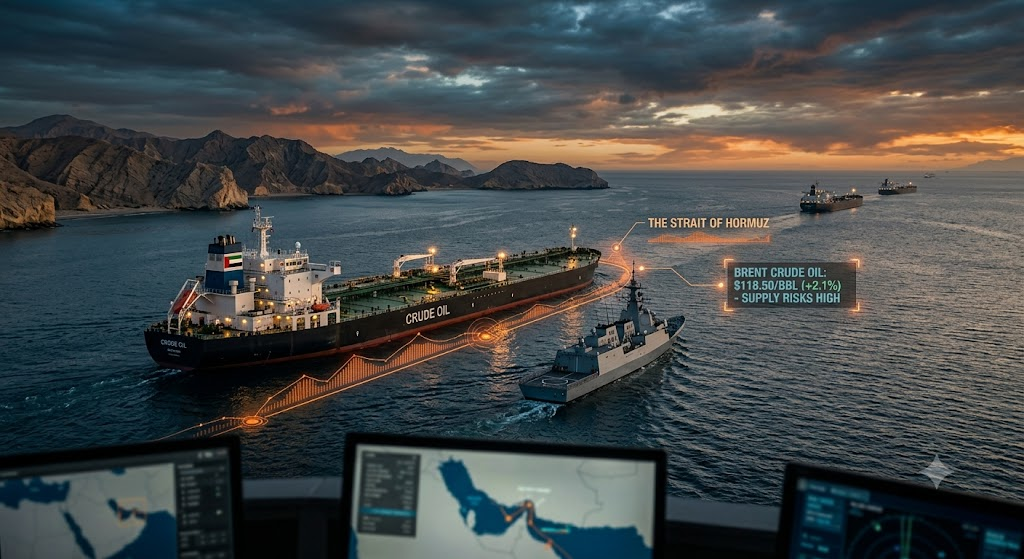
The primary driver of market anxiety remains the instability affecting the Strait of Hormuz. As a chokepoint for roughly 20% of the world’s liquefied natural gas and oil, any friction here sends immediate shockwaves through the energy complex.
- Crude Price Action: Brent crude is currently maintaining a floor above $100/bbl. While the initial panic of early spring has subsided, prices remain sensitive to drone activity and maritime insurance hikes.
- The SPR Buffer: Strategic Petroleum Reserve releases from the U.S. and IEA partners have provided a temporary ceiling, but markets are questioning the long-term sustainability of these “buffer” tactics.
2. The Semiconductor “Fault Lines”
Beyond energy, the “Digital Cold War” has entered a new phase of fragmentation. Markets are pricing in the end of globalized chip efficiency in favor of regionalized “resilience.”
- Onshoring Costs: Massive subsidies in the U.S. and EU are beginning to bear fruit in terms of infrastructure, but the high cost of domestic production is putting pressure on the margins of major tech firms.
- Export Controls: Recent tightening of restrictions on AI-capable hardware has led to a divergence in tech valuations. Companies with diversified supply chains in Southeast Asia and India are currently outperforming those with heavy exposure to restricted zones.
3. Central Bank Dilemma: Inflation vs. Stability
The Federal Reserve and the ECB are facing a classic “Catch-22.” Geopolitical supply shocks are inherently inflationary, yet the resulting economic uncertainty threatens to dampen growth.
- Yield Curve Signals: We are seeing a “bear steepening” of the yield curve, reflecting expectations that interest rates will remain “higher for longer” to combat energy-driven price pressures.
- Safe Haven Rotation: Gold and the U.S. Dollar continue to serve as the primary hedges. Gold has recently breached key resistance levels, signaling that institutional investors are bracing for a prolonged period of volatility.
Summary Table: Key Market Indicators
| Asset Class | Current Sentiment | Primary Driver |
| Brent Crude | Bullish | Shipping disruptions & low global inventories. |
| S&P 500 | Neutral/Cautious | Tech margin compression vs. strong earnings. |
| Gold | Strong Bullish | Geopolitical hedging & currency debasement fears. |
| 10Y Treasury | Volatile | Uncertainty over the Fed’s next terminal rate. |
Strategic Outlook
In this environment, “buying the dip” is no longer a universal solution. Success in 2026 requires a discerning eye for geopolitical insulation. We are currently favoring sectors with high domestic supply chain integration and companies that provide the essential infrastructure for energy transition and defense.
Investor Note: Watch the $110/bbl mark on Brent crude. A sustained break above this level will likely trigger a broader rotation out of consumer discretionary stocks and into defensive energy and utility plays.