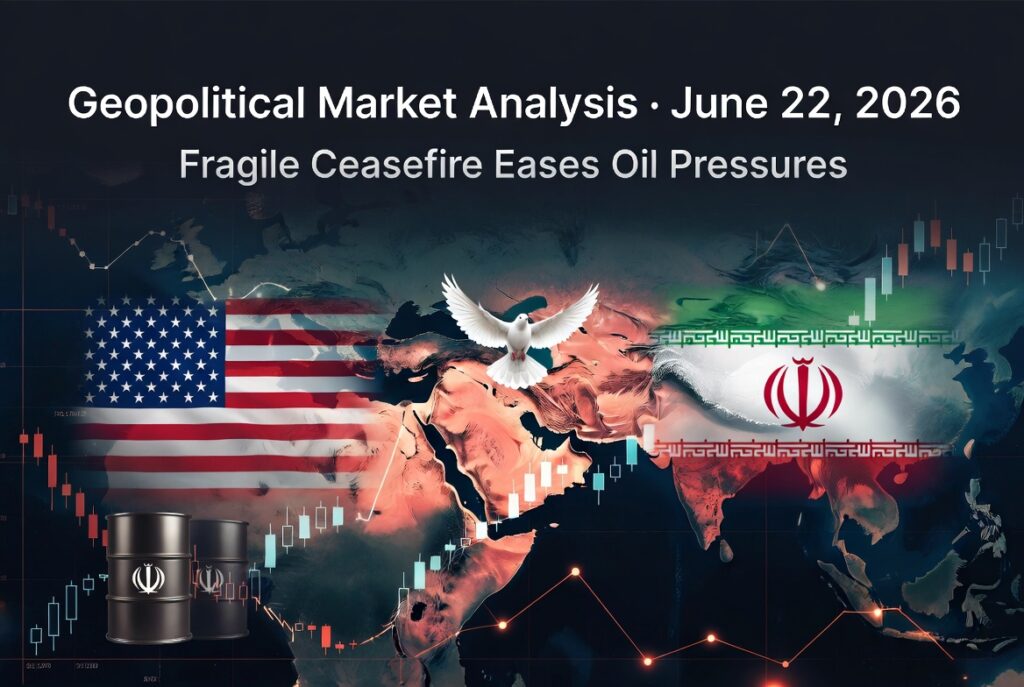
Geopolitical Market Analysis: June 22, 2026 – Fragile Middle East Ceasefire Eases Oil Pressures, Markets Eye Resilience Amid Broader Risks
Executive Summary
As of June 22, 2026, global markets are showing resilience despite ongoing geopolitical uncertainties centered on the Middle East. A fragile US-Iran ceasefire, extended via a June memorandum and bolstered by recent talks in Switzerland, has helped stabilize oil prices after earlier spikes tied to Strait of Hormuz disruptions. Equity markets, particularly US indices, remain near highs supported by strong corporate earnings in tech and AI sectors, though investors are watching inflation data, Fed signals under new Chair Kevin Warsh, and longer-term risks like US policy shifts and US-China tensions.
Oil has pulled back toward the mid-$70s per barrel amid de-escalation hopes, providing relief on the inflation front, but the truce remains tenuous with technical talks ongoing.
Key Geopolitical Developments
1. US-Iran Dynamics and Middle East Ceasefire The most immediate market-moving event is the fragile ceasefire in the US-Iran conflict. Following military escalations earlier in 2026, a memorandum extended the truce (including elements in Lebanon), with recent talks in Switzerland described as “positive and constructive” by mediators. Progress includes potential oil export waivers, asset releases, and de-confliction mechanisms for the Strait of Hormuz.
However, divergences in interpretations persist (e.g., sanctions relief timelines and Hormuz access), and President Trump has issued warnings about potential renewed strikes. A durable deal could significantly boost global energy supply, but risks of flare-ups remain elevated.
2. Broader Global Risks
- US Political and Policy Shifts: Under the Trump administration, a more interventionist and transactional approach (sometimes termed elements of “state capitalism”) continues, with impacts on trade, alliances, and domestic governance. Midterms later in 2026 add uncertainty.
- Europe and China: EU-China tensions over industrial overcapacity (EVs, tech) persist, alongside Europe’s internal challenges and security concerns.
- Other Flashpoints: Lingering Russia-Ukraine effects, Latin American shifts, and critical minerals competition add layers of fragmentation.
Geopolitical risk indices remain elevated, but historical patterns show markets often look through short-term events unless they materially disrupt growth or inflation.
Market Impacts and Performance
Energy and Commodities: Oil prices (WTI/Brent) have eased recently, trading around $75-78/bbl as of June 22, down from peaks above $100 amid Hormuz disruptions. Hopes for resumed flows and ceasefire extensions are supportive of a downward trend, though inventories are low and any breakdown could spike prices sharply. This eases inflationary pressures and benefits consumer-facing sectors.
Equities: US markets have been strong, with the S&P 500 near record levels (around 7,500 in recent trading) driven by tech/AI earnings. Short-term volatility from geopolitics has been digested, with rebounds post-ceasefire news. International equities show mixed performance, with energy-sensitive regions lagging.
Fixed Income and Currencies: Bond yields have moderated with falling oil prices. The dollar remains influenced by Fed expectations under Warsh and US policy.
Upcoming Catalysts (Week of June 22):
- US economic data: PMIs, PCE inflation, GDP revisions, and housing figures. Hotter inflation could temper rate cut hopes.
- Continued US-Iran technical talks.
- Fed messaging and broader policy signals.
Outlook and Risks
Bullish Factors: Strong US corporate fundamentals (especially tech), potential energy supply normalization, and markets’ historical ability to recover from geopolitical shocks.
Downside Risks:
- Ceasefire breakdown leading to renewed oil/supply shocks.
- Persistent inflation reigniting hawkish Fed stance.
- Escalation in other theaters or trade fragmentation (US-China/EU).
Investment Implications: Diversification remains key. Energy and defense sectors may offer hedges, while growth/tech benefits from lower energy costs. Long-term, investors should monitor supply chain resilience, critical minerals, and the evolving global order. Scenario planning for volatility is advisable.
Markets have demonstrated remarkable adaptability in 2026 so far. While headlines dominate, the underlying economic channels—growth, inflation, and corporate earnings—will likely dictate sustained performance. Stay tuned for updates as Switzerland talks progress and key US data drops.
This analysis is for informational purposes and not investment advice. Data as of June 22, 2026.