Geopolitical Market Analysis: June 11, 2026
Executive Summary
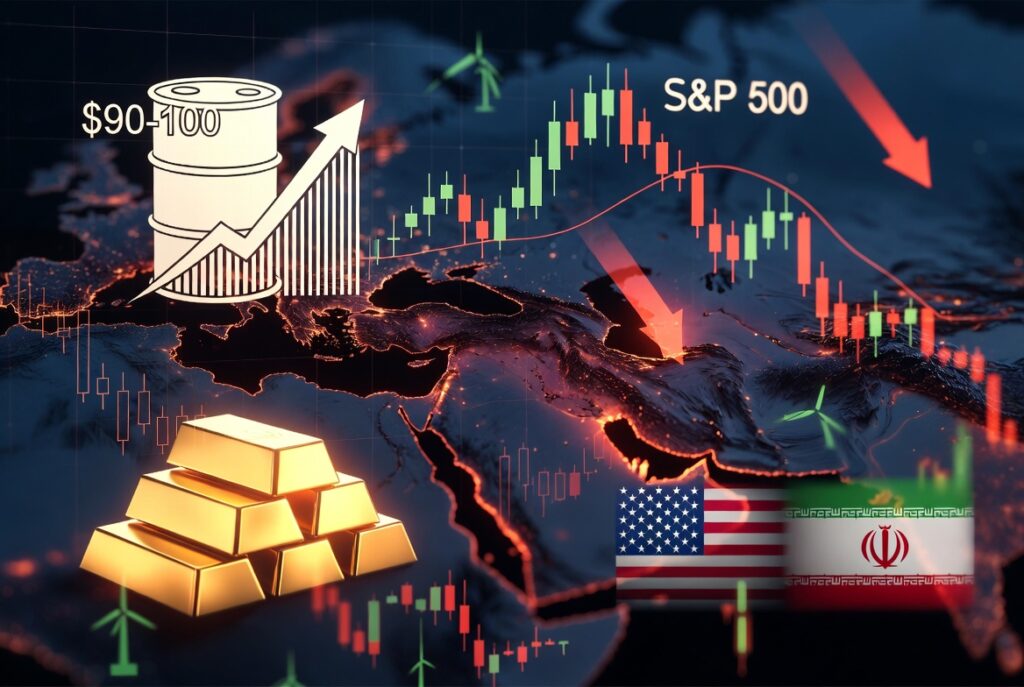
Global markets remain on edge amid persistent Middle East tensions, particularly the fragile US-Iran ceasefire and recent exchanges involving Israel, Iran, and regional proxies. Oil prices have climbed on supply disruption fears tied to the Strait of Hormuz, while equities show volatility with tech-led pullbacks. Safe-haven assets like gold trade at elevated levels, and the US dollar holds steady. Investors are balancing geopolitical risks against resilient corporate earnings and economic data.
Equity Markets: Volatility Amid Record Territory
US indices experienced turbulence in recent sessions. The S&P 500 closed near 7,267 (down around 1.6%), the Dow Jones around 49,919 (down ~1.9%), and the Nasdaq near 25,170 (down ~2%). These moves reflect profit-taking in technology and semiconductor stocks, hotter-than-expected inflation readings, and renewed war escalation concerns.Earlier in June, major indices had hit or approached all-time highs (with the S&P 500 surpassing 7,600 at points), supported by strong AI-driven earnings and hopes for de-escalation. Year-to-date gains remain solid in the 15-20% range for major averages, though near-term sentiment has turned cautious. Small-cap stocks (Russell 2000) have under-performed amid higher interest rates and uncertainty.
Key drivers:
- Tech and semiconductor sector sensitivity to risk-off moves.
- Resilient corporate earnings, particularly from companies benefiting from AI tailwinds.
- Upcoming inflation data and Federal Reserve signals as important near-term catalysts.
Asian and European markets opened mixed, with energy stocks gaining while broader indices faced pressure from global risk aversion.
Commodities: Oil Spikes on Geopolitical Premium
Crude oil prices remain elevated, with WTI and Brent trading in the higher ranges amid fears of supply disruptions in the Strait of Hormuz. Recent incidents, including strikes and events involving US assets, have added a significant geopolitical premium despite earlier ceasefire efforts.
Gold continues to perform as a standout safe-haven asset, trading well above $4,000 per ounce and holding strong even after pulling back from recent peaks.
Fixed Income and Currencies
US Treasury yields are hovering around 4.5–4.6% for the 10-year note, reflecting mixed inflation signals and shifting rate expectations. The US Dollar Index (DXY) remains near 100, showing resilience as a safe-haven currency amid global uncertainty without dramatic strength.
Geopolitical Landscape: Middle East Dominates
The dominant market theme continues to be the ongoing Iran-related conflict and its aftermath. A major escalation earlier in the year led to significant strikes and a temporary ceasefire in April. However, early June saw renewed missile exchanges, proxy involvement (Hezbollah, Houthis), and incidents in the Hormuz region.
- Peace negotiations between the US and Iran face significant hurdles, particularly around nuclear issues, regional proxies, and secure access through the Strait of Hormuz.
- Risks include further energy supply disruptions, higher shipping costs, and potential regional contagion.
- Interlinked tensions in Gaza and Lebanon add further complexity to the situation.
Outlook and Risks
Supportive factors: Strong corporate fundamentals (especially in AI and technology), potential diplomatic breakthroughs that could reduce the geopolitical premium, and an overall resilient US economy.
Key risks:
- Further escalation in the Gulf leading to sustained higher energy prices and inflation.
- Sensitivity of high-valuation tech stocks to rising rates and risk aversion.
- Policy responses and upcoming economic data releases.
Markets have demonstrated notable resilience but remain highly sensitive to headlines from the Middle East. Traders and investors should closely monitor oil market developments, Hormuz updates, inflation prints, and any signals from US-Iran negotiations.
Investment Implications (for informational purposes only; not financial advice):
- Diversification across sectors and geographies is essential.
- Energy and defense sectors may benefit from prolonged tensions, while defensives and gold can serve as hedges.
- Elevated volatility creates both risks and tactical opportunities.
This analysis reflects market conditions as of June 11, 2026. Financial markets move rapidly — always cross-reference with real-time data and multiple sources before making decisions.