
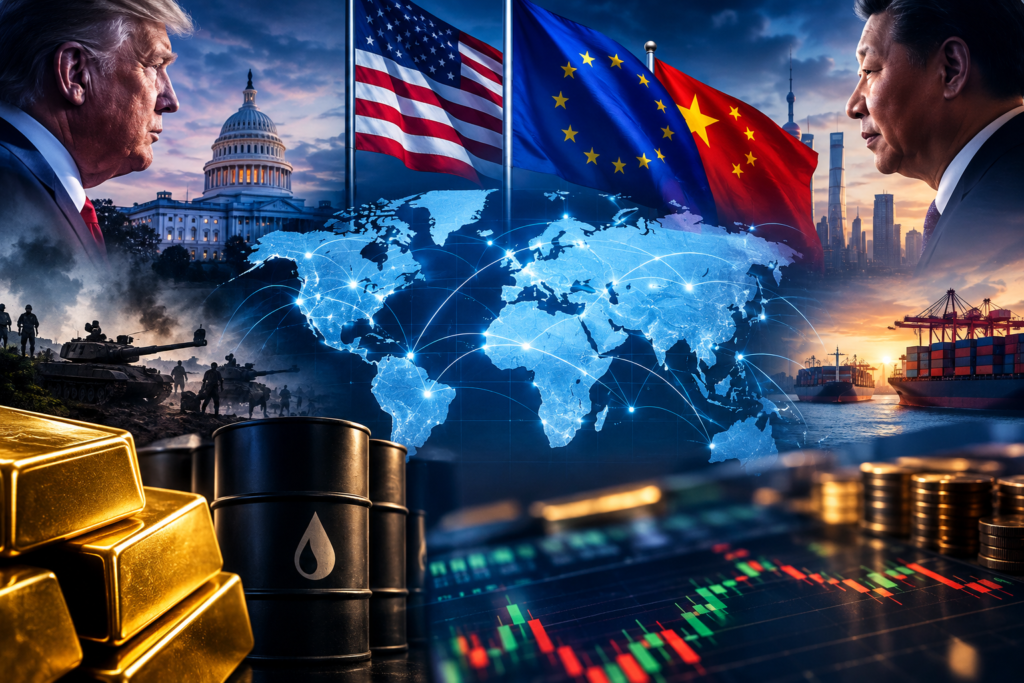
Geopolitical Flashpoints and Global Markets: October 14, 2026 Briefing
As of Wednesday, October 14, 2026, the world remains gripped by escalating regional conflicts that are reshaping energy flows, alliance structures, and investor risk appetite. Multiple theaters of tension—centered on the Middle East and Eastern Europe—are interacting with a cautious global market environment ahead of key U.S. economic data. Elevated oil prices, mixed equity performance, and persistent inflation concerns define the financial backdrop, while diplomatic and military developments continue to inject volatility.
Middle East Escalation: Houthi-Saudi Clashes and Iranian Pressure on Shipping
The most immediate pressure point is the intensifying conflict between Yemen’s Iran-aligned Houthi movement and Saudi Arabia. In recent days, Houthi forces have launched successive missile and drone attacks targeting Saudi cities, including Riyadh and Dammam. These strikes hit King Khalid International Airport in Riyadh, causing fatalities (reports indicate at least a dozen killed in one major incident and further casualties in follow-on attacks) and hundreds of injuries. An administrative facility linked to Saudi Aramco in Dhahran sustained fire damage after interception of incoming projectiles, with falling debris affecting residential areas.
Saudi Arabia has responded with airstrikes on Houthi-controlled sites, including a fuel depot near Sanaa. Riyadh’s international airport has faced prolonged closures and widespread flight cancellations, disrupting regional air travel and pilgrimage-related movements. Saudi officials have vowed a “serious” and strong response, emphasizing that energy security cannot be taken for granted. Houthi representatives have warned against deeper external involvement, particularly by the United States.
Parallel developments involve Iran. Iranian officials have signaled a shift in the pace, type, and geographic scope of attacks on shipping near the Strait of Hormuz. The apparent aim is to sustain elevated oil prices in the run-up to the U.S. midterm elections in early November. This comes amid ongoing broader tensions involving Iran, including U.S. naval operations and previous strikes related to the Iran conflict. Reports also note UK concerns over Iranian Revolutionary Guard Corps involvement in a security incident at an RAF base, which Tehran has denied.
These events are compounding risks to Gulf energy infrastructure and shipping lanes that carry a significant share of global oil. While some tanker traffic has continued with assistance, the cumulative effect is heightened insurance costs, rerouting pressures, and supply uncertainty.
Russia-Ukraine War: Energy Ceasefire Claims Meet Continued Strikes
In Eastern Europe, the Russia-Ukraine conflict shows little sign of de-escalation on the energy front. U.S. President Donald Trump recently announced an “energy ceasefire,” claiming both sides had agreed to halt attacks on energy infrastructure, alongside a deal facilitating Russian diesel exports (initial volumes of hundreds of thousands of tones, with larger staged releases and a U.S. Treasury license extending into 2027). The stated goal includes easing global and U.S. fuel prices ahead of the midterms.
Ukrainian President Volodymyr Zelenskyy has stated that Russia continued striking Ukrainian energy targets—including power plants and grid infrastructure—shortly after the announcement. Kyiv has indicated it refrained from reciprocal energy strikes and remains open to a genuine ceasefire as a potential step toward broader de-escalation, while questioning the practical implementation. Russian statements have described talks as ongoing rather than fully concluded. Additional reports note Ukrainian forces targeting Russian data centers and continued hybrid pressures, including drone incidents affecting merchant shipping off Bulgaria’s Black Sea coast (one vessel sunk, crew casualties, prompting Bulgaria to summon Russia’s ambassador).
NATO’s top military commander has publicly affirmed the alliance’s readiness to respond if attacked, outlining deterrence concepts that incorporate lessons from the Ukraine war, including autonomous systems and enhanced sensors along the eastern flank. European concerns about Russian hybrid activities (sabotage, cyber, and influence operations) remain elevated.
Other Geopolitical Threads
- Europe and transatlantic relations: A UK-EU summit has opened pathways for closer post-Brexit ties. Hungary has moved to repeal most of the Orban-era restrictions related to LGBTQ issues. Ukraine advanced in its EU membership process by clearing a key legislative hurdle on minority rights.
- Broader regional notes: Hezbollah has announced financial aid packages for Lebanese families whose homes were damaged in prior conflict with Israel. Separate reports cover ongoing issues in Africa (including border tensions between Ethiopia and Eritrea) and migrant tragedies in the Red Sea region.
- U.S. domestic-political overlay: The approaching midterms are influencing calculations on both Iran-related operations and energy diplomacy. Officials have indicated restraint on major new Iranian strikes until after the vote, while economic measures and diesel supply deals aim to manage domestic price pressures.
These dynamics illustrate a multipolar pressure environment: energy leverage is being used as a tool of statecraft, alliances are being tested and realigned (including reported Saudi outreach toward Pakistan and Turkey), and hybrid tactics extend conflict beyond traditional battlefields.
Global Markets Snapshot: Caution Ahead of Inflation Data
Financial markets are navigating the geopolitical noise against a backdrop of elevated energy costs, mixed corporate earnings, and anticipation of the U.S. Consumer Price Index (CPI) release. Investors are weighing whether inflation remains sticky enough to keep the Federal Reserve on a tighter path.
Equities:
- U.S. markets closed Tuesday with limited movement overall. The S&P 500 finished essentially flat near 7,805 (slightly off recent highs). The Dow Jones Industrial Average declined about 0.35% to around 51,670. The Nasdaq Composite slipped roughly 0.15% to near 27,204, pressured by semiconductor weakness.
- Chipmakers faced notable selling for multiple sessions, driven by concerns over rising competition from Chinese firms in memory and related technologies. Certain bank earnings were mixed: some institutions beat on trading or specific lines while others missed profit expectations or guided cautiously, contributing to sector softness. Energy stocks provided a partial offset amid higher oil prices. Healthcare names also underperformed in places.
- Asian markets showed mixed recovery attempts on Wednesday after earlier tech-driven losses (South Korea’s Kospi had experienced a sharp prior-day drop). European futures pointed modestly higher in early indications.
- Broader context: Equities have shown resilience through much of 2026 despite geopolitical and rate pressures, supported in part by AI-related themes and earnings growth expectations, though volatility in semiconductors highlights concentration risks.
Commodities and Energy:
- Oil prices remain elevated and responsive to Middle East headlines. Brent crude has traded in the mid-to-high $100s per barrel range (around $106–$109 in recent sessions), while West Texas Intermediate (WTI) has hovered near the mid-$90s to mid-$90s. Attacks on Saudi infrastructure and Iranian shipping pressure support the upside, partially counterbalanced by the prospect of additional Russian diesel supply and ongoing production dynamics. Hurricane impacts on U.S. Gulf production have also factored into near-term tightness.
- Gold has traded near or above $4,150–$4,160 per ounce, holding relatively steady but under some pressure from higher yields and rate expectations. Silver has similarly softened modestly. Safe-haven demand competes with opportunity costs from elevated real rates.
- Other commodities reflect the mixed risk environment, with energy strength contrasting broader industrial metal caution in some cases.
Currencies, Bonds, and Rates:
- The U.S. dollar has softened in recent sessions against a basket of currencies, influenced by shifting Fed commentary. New York Fed President John Williams indicated one additional rate hike this year could still be appropriate but saw little need for further tightening into 2027—comments that helped stocks recover from intraday lows.
- U.S. Treasury yields remain elevated by historical standards (10-year near 5.22%), reflecting inflation concerns from energy prices and fiscal dynamics, though they eased somewhat recently. Global bond markets are watching European and other sovereign auctions alongside U.S. data.
- Forex moves are modest overall, with the dollar’s direction heavily dependent on the CPI outcome and subsequent Fed path signals.
Interconnections and Outlook
Geopolitical risks and markets are tightly linked today. Sustained disruption risks in the Strait of Hormuz or further damage to Saudi energy facilities would likely keep oil elevated, feeding into inflation readings and complicating central bank calculations. The Russia diesel arrangement and claimed energy ceasefire represent attempts to introduce supply relief and de-escalation optics, yet continued strikes undermine confidence in implementation. Equity markets have so far absorbed much of the noise without major breakdowns, aided by corporate earnings momentum, but semiconductor pressure and high yields illustrate underlying vulnerabilities.
Looking ahead, the U.S. CPI release stands as the immediate market catalyst. Softer inflation could ease rate-hike expectations and support risk assets and gold; stickier readings would reinforce the higher-for-longer narrative and potentially amplify geopolitical risk premia. In the Middle East, the trajectory of Houthi-Saudi exchanges and Iranian shipping tactics will determine near-term energy volatility. In Ukraine, verification of any genuine restraint on energy targeting will shape both military and diplomatic assessments.
For investors and observers, the environment demands close monitoring of energy infrastructure integrity, alliance signaling, and the interplay between political calendars (U.S. midterms) and conflict dynamics. Volatility is likely to persist as these overlapping pressures continue to unfold.
This analysis reflects conditions as of early October 14th, 2026. The analysis is for informational and educational purposes. Market conditions change rapidly—always conduct your own due diligence or consult a financial advisor.