
In-Depth Geopolitical Market Analysis: September 24, 2026
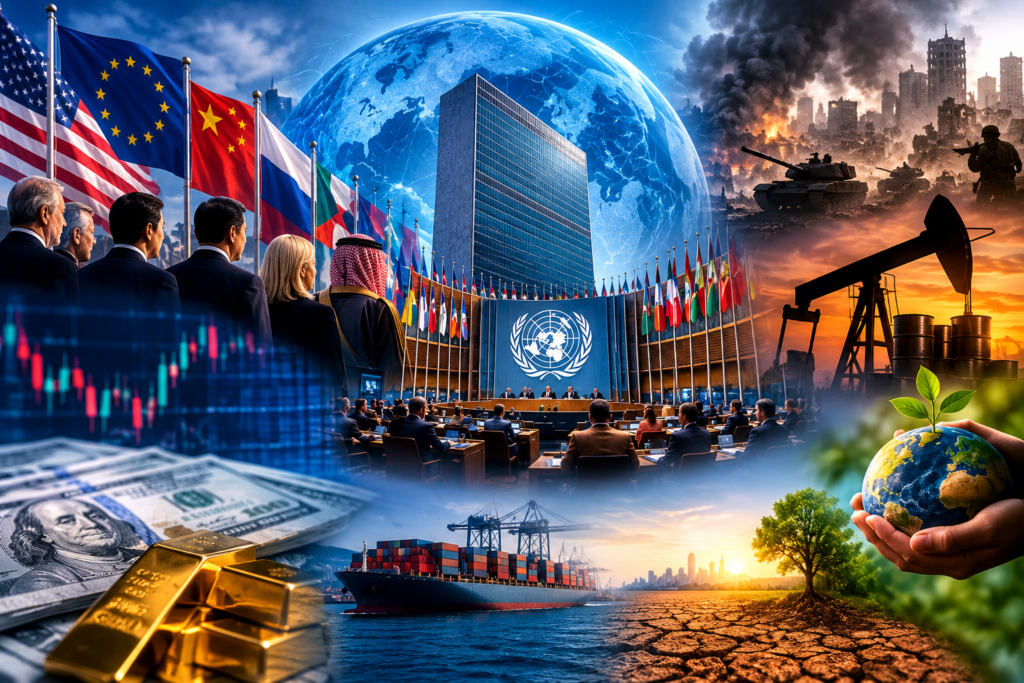
Global markets and geopolitics remain tightly interwoven amid the ongoing Iran conflict, a high-stakes U.S.-China summit, persistent Russia-Ukraine fighting, and secondary flashpoints. Risk premiums from Middle East tensions, elevated oil prices, and surging bond yields dominated sentiment into Thursday, with Wall Street closing lower the prior session and Asia showing caution. Diplomacy at the UN General Assembly and the Trump-Xi meetings offer potential de-escalation signals, but hard power realities and economic pressures continue to drive volatility.
U.S.-China Summit: Trade Truce Extension and Strategic Balancing
Chinese President Xi Jinping arrived in Washington for a state visit, receiving a rare planeside welcome from President Donald Trump—an unusual gesture underscoring the priority both sides place on stabilizing ties. The United States and China agreed to extend their trade truce by two months (into early January), providing near-term relief on tariffs while talks address AI regulation, Taiwan-related issues (including arms sales), and broader economic coordination.
Markets view this as modestly constructive for global supply chains and tech sectors, though deep distrust persists on technology, security, and industrial policy. Related discussions signal openness to further extensions or a larger deal, but any breakthrough will be tested by domestic politics on both sides and competing ambitions in AI and critical technologies. Positive early optics have not fully offset broader risk-off moves driven by energy and rates.
Middle East: Iran Conflict, Strait of Hormuz Pressures, and Diplomacy
The 2026 Iran war and associated Strait of Hormuz crisis remain the dominant geopolitical risk. The U.S. maintains a naval blockade (redirecting over 100 commercial vessels since mid-July), while attacks on shipping continue—an incident near the Strait killed an Indian crew member on a bulk carrier, with evacuations by Omani forces. Iran has reopened schools and universities after prolonged closures, signaling some normalization of civilian life even as the conflict grinds on.
At the UN, Iranian President Masoud Pezeshkian delivered a defiant address, framing Iran as a victim of U.S. “terrorism” and rejecting surrender to pressure, while displaying imagery related to past strikes. This followed Trump’s UN remarks weighing options that included potential “annihilation” of the Islamic Republic alongside signals of ongoing contacts. U.S. negotiators held talks with Iranian counterparts via mediators; conversations on the nuclear program restarted without breakthroughs. Trump has mixed tough rhetoric with predictions of an eventual deal (possibly post-midterms) and calls for complete economic isolation.
Secondary effects include new U.S. sanctions hitting Iranian aviation (suspensions of certain international routes) and continued regional spillover: Saudi airstrikes in Yemen, Houthi threats, Israeli actions in Gaza (including a Board of Peace $2.45 billion six-month recovery plan focused on housing and economic projects), and West Bank tensions.
Market impact: Oil rebounded sharply after a multi-day decline. Brent crude rose nearly 4% toward or above $103 per barrel in recent trading, with WTI near $92, reflecting risk premium on Hormuz transit and unresolved diplomacy. Energy equities outperformed while higher oil fed inflation concerns. Safe-haven flows supported gold near the $4,300 level at times, though higher yields limited gains. Crypto (Bitcoin) showed short-term selling pressure amid the risk mix.
Russia-Ukraine War: Energy Truce Talks and Broader Pressure
Ukrainian President Volodymyr Zelenskyy urged the UN General Assembly to sustain pressure on Russian revenues and production capacity, warning of risks of wider European spillover and preparing for another difficult winter. Russian strikes on Ukrainian infrastructure continued, causing civilian casualties. Both sides have shown interest in a limited ceasefire covering energy infrastructure and grain shipments; the U.S. has indicated openness to facilitating if useful.
Trump invited Russian President Vladimir Putin to the U.S.-hosted G20 summit in Florida, framing engagement as necessary despite allied discomfort over the ongoing invasion. Poland scrambled jets after a reported Russian helicopter airspace violation near its border. These developments keep European security and energy markets sensitive to escalation or de-escalation signals.
Other Flashpoints
- Ethiopia: The Tigray People’s Liberation Front (TPLF) seized several airports and declared a “defensive war” amid clashes in Tigray, Afar, and Amhara regions, raising fears of renewed large-scale civil conflict.
- India-U.S.: External Affairs Minister S. Jaishankar raised concerns with U.S. counterparts about the Sanctioning Russia and Iran Act and its potential secondary effects.
- Additional items include Venezuela’s interim leadership pledging elections “at the right moment,” continued Gaza/West Bank violence, and various UN speeches on governance and security.
Global Markets Snapshot and Drivers
Wall Street closed lower on September 23: S&P 500 down ~0.75% (near 7,706), Nasdaq ~1.13% lower, Dow ~0.68% lower. Tech and megacap names weighed, while energy gained on the oil rebound. Stronger U.S. business activity data pushed Treasury yields higher—the 10-year note reached levels last seen around 2007 (above 5.1% in some readings)—raising expectations of further Federal Reserve tightening after a recent 25 bp move.
Asian markets were mixed to softer into September 24, with oil-driven inflation and rate concerns prompting caution; Japanese stocks showed resilience after a holiday. European indices posted modest declines. The dollar remained firm. Gold traded near multi-week levels with some pressure from higher rates; copper has been strong year-to-date on structural demand.
Key cross-currents:
- Oil and inflation: Middle East unresolved risks support prices and complicate central bank paths.
- Rates and growth: Higher yields pressure equities (especially duration-sensitive tech) while strong U.S. data supports a “higher for longer” narrative.
- Diplomacy premium: Progress on Iran talks, U.S.-China stability, or limited Ukraine energy understandings could ease risk premiums; setbacks would reverse that quickly.
- Structural themes: AI remains a longer-term equity support, but near-term macro and geopolitics dominate.
Outlook and Risks for Markets
The immediate focus is the Trump-Xi meetings and any concrete outcomes on trade/AI, alongside Iran diplomacy signals from New York. A durable de-escalation in the Middle East would likely pressure oil lower and support risk assets; continued blockade effects or new incidents keep energy volatility elevated. Higher yields and oil create a challenging mix for growth-sensitive assets and emerging markets sensitive to dollar strength and commodity costs.
Investors should monitor shipping data through Hormuz, U.S. inventory and production responses, Fed commentary, and any breakthrough language from Washington or the UN. Secondary risks (Ethiopia, Yemen, Ukraine winter energy dynamics) add tail risks. Overall, the environment favors selective positioning: energy and select defensives on geopolitics, quality growth on any sustained de-escalation, and caution on high-duration or pure risk assets until clarity improves on the dual axes of Middle East conflict and major-power diplomacy.
This analysis reflects conditions as of early September 24th, 2026. The analysis is for informational and educational purposes. Market conditions change rapidly—always conduct your own due diligence or consult a financial advisor.