
Geopolitical Markets & News Analysis: September 18, 2026
Oil Softens on Diplomatic Hopes, Stocks Rebound, and Central Banks Tighten Amid the Seventh Month of the Iran War
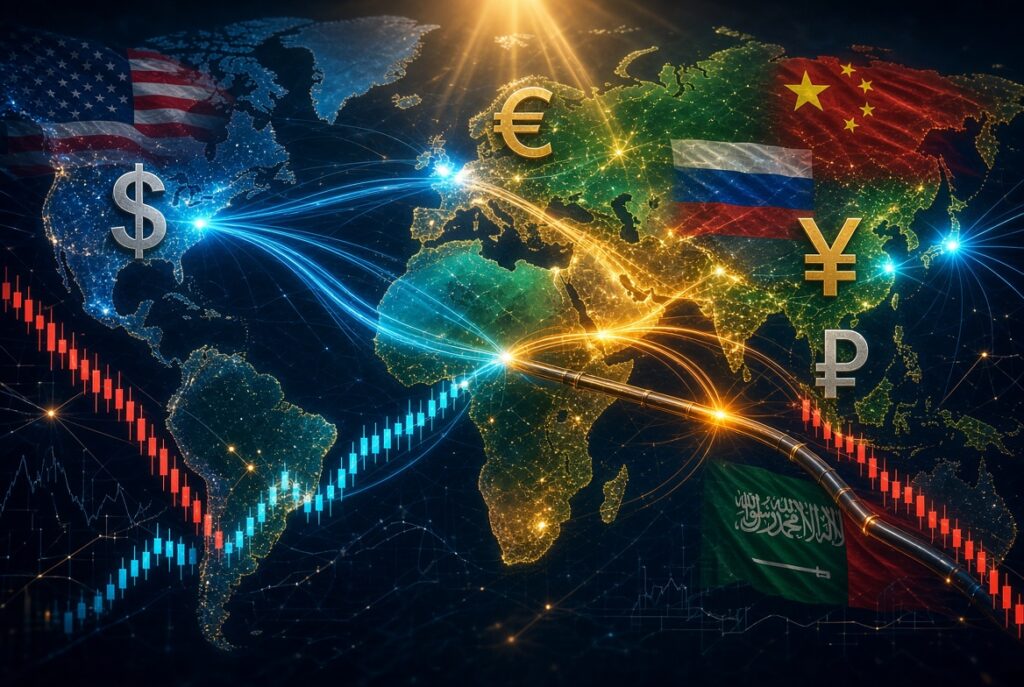
As of Friday, September 18, 2026, global markets and geopolitics remain tightly intertwined around the ongoing U.S.-Iran conflict (now in its seventh month), spillover fighting in Yemen, Russian wartime elections, and a synchronized push by major central banks against energy-driven inflation. Risk assets staged a notable recovery Thursday after the Federal Reserve’s first rate hike in years, while oil prices continued to ease on hopes of diplomacy and partial supply relief. Gold held firm as a geopolitical hedge. The outlook hinges on Trump’s upcoming meetings with Gulf leaders and potential next steps with Tehran.
1. The Middle East Flashpoint: Iran War, Hormuz Risks, and Regional Escalation
The defining geopolitical story remains the U.S.-Iran war that began on February 28, 2026. President Donald Trump stated that an end “may be near” and claimed direct contact with Iranian leaders, saying they “want to make a deal.” He is scheduled to meet leaders from Saudi Arabia, the UAE, Qatar, Bahrain, Kuwait, and Oman on the sidelines of the UN General Assembly next week to discuss strategy.
Despite the rhetoric, tangible progress is limited. Iran’s Islamic Revolutionary Guard Corps reportedly struck the Togo-flagged oil tanker Trend attempting to transit the Strait of Hormuz. Ship traffic through the critical chokepoint (normally carrying ~20% of global oil) remains heavily disrupted. A UN fact-finding mission concluded that certain U.S. strikes earlier in the conflict—particularly one on a school in Minab that killed over 100 children—may have constituted war crimes due to reckless targeting of civilian infrastructure.
Russia and China vetoed a U.S. resolution to renew UN monitoring of Iran’s nuclear program, underscoring the deep divide among permanent Security Council members. China has publicly affirmed its readiness to safeguard Iran’s “rights and interests”.
Parallel escalation continues in Yemen: intense fighting between Iran-backed Houthis and Saudi-backed forces has killed dozens in recent days, with Saudi airstrikes and ground clashes drawing the conflict closer to oil infrastructure and Red Sea shipping lanes. The U.S. has approved a $24.3 billion sale of up to 48 F-35 stealth fighters to Saudi Arabia despite intelligence community concerns that China could gain access to sensitive technology.
South Korea’s President Lee Jae Myung explicitly rejected Trump’s requests for troop contributions to the Iran theater, highlighting limits to U.S. alliance leverage even among long-standing partners.
2. Russia, Ukraine, and Broader Power Competition
Russians began three days of voting in the State Duma elections under wartime conditions. The vote, tightly controlled with opposition parties such as Yabloko barred, is expected to cement Kremlin dominance amid ongoing Ukrainian strikes on Russian oil infrastructure.
A new U.S. congressional sanctions bill (passed by the House) gives Trump discretion to impose up to 100% tariffs on countries purchasing Russian oil and gas—explicitly targeting major buyers including India and China—while expanding measures against Iran and Russia’s “shadow fleet.” Nuclear fuel exemptions were retained. This secondary-sanctions approach risks further fragmenting global energy trade and accelerating de-dollarization efforts.
An early Trump-Xi summit is expected around September 24 in Washington, with AI competition and the existing trade truce likely central topics.
3. Market Reactions: Risk Appetite Returns as Oil Eases
Equities: Wall Street staged its strongest session in six weeks on Thursday. The S&P 500 rose 1.14% to approximately 7,638, the Nasdaq Composite climbed ~1.7% to around 26,418, and the Dow Jones added 0.61% to roughly 51,778. Chipmakers and tech led the rebound after earlier AI-related concerns, helped by declining oil prices and bond yields following the Fed’s 25-basis-point hike (to a 3.75–4.00% range).
U.S. futures opened Friday mixed to slightly weaker, reflecting residual caution. Asian markets were broadly higher, with South Korea’s Kospi and Japan’s Nikkei among the leaders. Indian equities opened modestly positive as lower oil supported sentiment.
Oil: Brent crude extended its decline for a third session, trading in the $102–104 range (down roughly 2% on the day in early trading from Thursday’s close near $104.80). Prices have pulled back from recent peaks near $110 after reports of Saudi crude movements via alternative routes and growing hopes of diplomatic progress. Supply disruptions from the conflict are still estimated in the multi-million-barrels-per-day range, but demand destruction has helped prevent a more extreme spike.
Analysts have noted difficulty establishing a clear “endgame” baseline for oil markets given the uncertainty.
Gold and Safe Havens
Spot gold edged higher to around $4,345–$4,355 per ounce, supported by lower oil (easing inflation fears), a softer dollar, and persistent geopolitical risk. Central-bank buying and structural demand remain supportive longer-term; some forecasts still see potential toward $5,400 by end-2027 despite higher rates.
Currencies and Rates
The Bank of Japan raised its policy rate by 25 basis points to 1.25%—the highest level since 1995—in a 7-2 vote, citing risks of inflation overshooting the 2% target amid elevated energy costs. The decision followed public pressure from U.S. Treasury Secretary Scott Bessent and came after the Fed’s hike and recent ECB tightening. The yen initially softened on the lack of stronger hawkish signals.
4. Key Themes and Outlook
- Diplomacy vs. Escalation: Trump’s “big decision” language—whether to intensify attacks or pursue a deal—and next week’s Gulf meetings are the near-term pivot points. A credible de-escalation in Hormuz traffic would likely send oil lower and equities higher. Renewed major strikes or broader regional involvement (Yemen/Lebanon) would reverse that.
- Inflation and Policy Divergence: Energy prices remain the dominant inflation driver. Synchronized tightening by the Fed, BoJ, and others is containing some pressure but risks slowing growth, especially in energy-importing Asia and Europe.
- Secondary Effects: U.S. secondary sanctions threats against Russian oil buyers could strain relations with India and China just ahead of the Trump-Xi meeting. Arms sales to Saudi Arabia and Houthi advances complicate Gulf security calculations.
- U.S. Domestic Overlay: Early voting has begun for the 2026 midterms, adding a political dimension to foreign-policy and economic messaging.
Bottom line for markets: The current modest risk-on tone is fragile and diplomacy-dependent. Lower oil is providing temporary relief to equities and inflation expectations, but structural supply risks from the Middle East conflict and potential new tariffs keep volatility elevated. Watch Hormuz traffic data, Trump’s Gulf meetings, and any Iranian response for the next directional catalyst.
This analysis reflects conditions as of early September 18th, 2026. The analysis is for informational and educational purposes. Market conditions change rapidly—always conduct your own due diligence or consult a financial advisor.