Geopolitical Market Analysis: July 14, 2026
Executive Summary
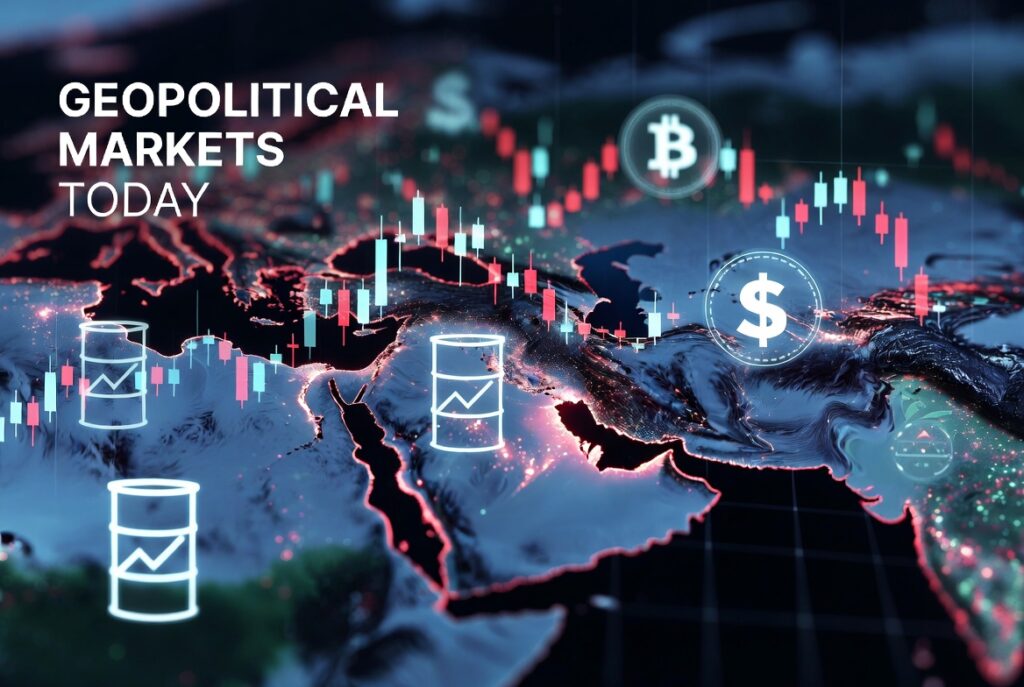
Markets today reflect heightened caution amid renewed geopolitical flare-ups in the Middle East, particularly around the Strait of Hormuz. Oil prices have surged on supply disruption risks, while major equity indices show modest declines or mixed performance. Safe-haven assets like gold remain elevated but face pressure from a firmer USD, and Bitcoin trades in a narrow range near $62,000. Investors are balancing energy shock risks against resilient corporate fundamentals and potential policy responses.
Equity Markets: Resilience Tested by Volatility
US indices traded with caution. The S&P 500 moved around the 7,500–7,575 level with slight pressure, the Dow Jones hovered near 52,500 with modest losses, and the Nasdaq faced heavier selling amid rotation out of tech and broader risk-off sentiment.
Broader global markets mirrored this caution, with mixed closes in Asia and Europe influenced by energy costs and regional exposures. Indices remain significantly higher year-over-year but have pulled back from recent peaks.
Commodities: Oil in Focus
Crude oil prices rose sharply, with benchmarks trading in the $78–$80+ range and posting daily gains of around 2%. This follows earlier volatility and reflects near-term supply concerns.
Key Driver: Disruptions and threats around the Strait of Hormuz, a critical chokepoint for global oil and LNG shipments. Recent incidents involving tankers have tightened supply outlooks and boosted prices, with spillover risks to inflation and shipping.
Longer-term outlooks suggest potential moderation if inventories build, but near-term risks dominate trading.
Currencies, Gold, and Crypto
The USD showed strength on safe-haven flows and rate expectations. Gold traded at elevated levels, supported by geopolitical uncertainty but pressured by higher yields and a firmer dollar. Bitcoin hovered near $62,000–$63,000, reflecting broader risk sentiment and macro crosscurrents.
Geopolitical Landscape: Middle East Tensions Dominate
The primary risk stems from ongoing Iran-related conflict developments, with recent brinkmanship over the Strait of Hormuz. Despite prior ceasefires and negotiations, shipping incidents and responses have kept energy markets on edge. This carries broader implications for global inflation, supply chains, and regional stability.
Other background factors include lingering effects from other conflicts on energy and trade, but the Hormuz situation is the acute driver today. Markets have demonstrated resilience to prior shocks through diversified supply and strong corporate balance sheets, though prolonged disruption could shift the outlook.
Outlook and Risks
Bullish Factors: Strong underlying economy, potential de-escalation, and earnings resilience.
Bearish Risks: Escalation in the Gulf pushing oil (and inflation) higher, delayed policy easing, or further tech valuation resets.
Key Data Ahead: Inflation prints, policy commentary, and any diplomatic updates on the region.
Bottom Line: Geopolitics is injecting volatility, with energy as the clearest transmission channel. Portfolios should emphasize diversification, with hedges against energy and inflation spikes. Monitor developments in the Middle East closely—they will likely set the tone for the near term. This environment favors selective opportunities in defensives, commodities, and quality growth names while maintaining liquidity.
This analysis is for informational purposes based on market conditions as of July 14, 2026. Markets move fast—always conduct your own due diligence.