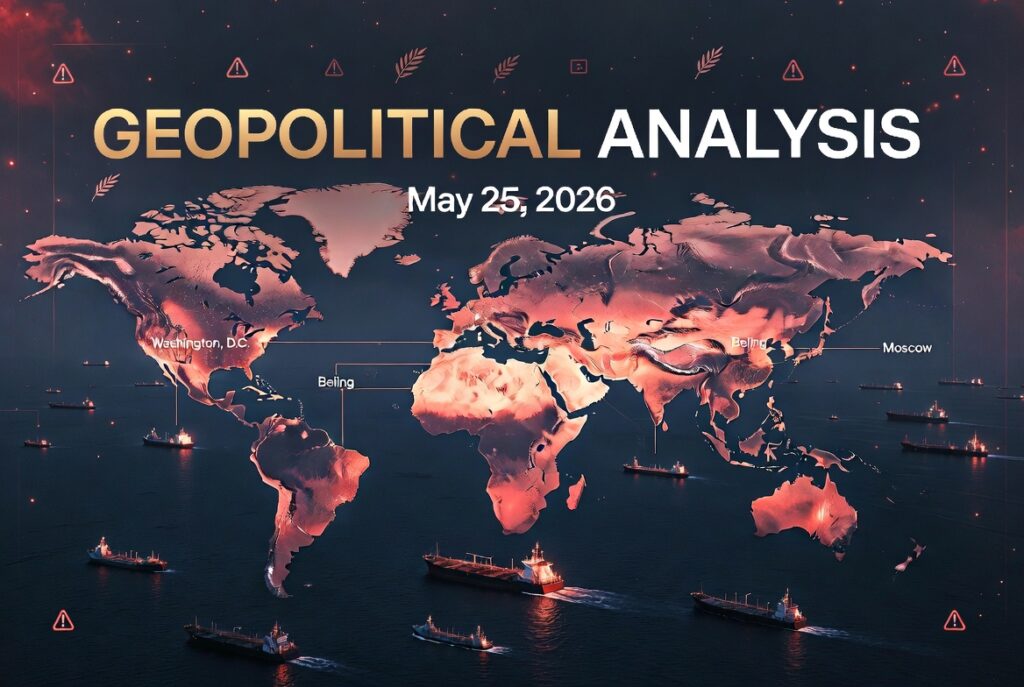
Geopolitical Analysis: May 25, 2026 – Fragile Progress Toward Iran Ceasefire Amid Global Realignments
Introduction
As of May 25, 2026, the world watches the Middle East with cautious optimism mixed with persistent uncertainty. The dominant story is the ongoing U.S.-Iran negotiations to formalize a ceasefire in the conflict that erupted earlier this year. President Donald Trump has signaled that a deal is “largely negotiated,” particularly regarding the reopening of the Strait of Hormuz, while cautioning against rushing into any agreement.This development occurs against a backdrop of broader geopolitical shifts: assertive U.S. actions in the Western Hemisphere, resilient China-Russia ties, and economic pressures rippling through global energy markets.The Iran File: Hormuz, Nuclear Concerns, and DiplomacyThe Strait of Hormuz remains the focal point. This critical chokepoint, through which roughly one-fifth of global oil and LNG historically flowed, has been heavily disrupted by conflict, blockades, and selective passages. Recent diplomatic efforts, mediated in part by Qatar and Pakistan, aim to:
- Reopen the strait without Iranian transit fees or politicized control.
- Facilitate the lifting of the U.S. naval blockade on Iranian ports.
- Address Iran’s highly enriched uranium stockpile and broader nuclear program.
Trump has emphasized that any deal must be stronger than the 2015 JCPOA, explicitly rejecting paths to a nuclear weapon for Iran. Progress appears real on maritime and ceasefire elements, but nuclear and regional proxy issues continue to introduce significant hurdles. Iran has shown some flexibility on Hormuz as a bargaining chip while maintaining firm positions elsewhere.Market and Strategic Implications: A successful reopening could ease oil prices and alleviate supply chain strains affecting global shipping, insurance, and energy-dependent economies. Failure or prolonged stalemate risks renewed escalation, higher commodity volatility, and inflationary pressures.Broader Global Context
- U.S. Assertiveness: Beyond Iran, U.S. policy reflects a renewed focus on hemispheric influence, seen in recent actions in Venezuela. This signals willingness to use leverage for strategic gains.
- China-Russia Axis: Ties between Beijing and Moscow remain strong, though economic realities—especially energy needs—temper full alignment against the West. Both nations appear focused on stable energy flows and managed competition.
- Europe and Global South: Fragmentation persists. EU-China tensions over trade and industrial capacity continue, while many Global South nations carefully navigate the current multipolar environment.
Risks and Opportunities Key Risks:
- Escalation if Iran talks collapse (military options remain on the table).
- Spillover effects on energy prices, shipping routes, and global inflation.
- Miscalculations in great-power diplomacy.
Opportunities:
- De-escalation in the Gulf could stabilize markets and open new commercial avenues.
- Diplomatic momentum might encourage broader regional settlements.
- Businesses can reposition supply chains for greater resilience amid ongoing friend-shoring trends.
Outlook May 2026 marks a potential inflection point. A U.S.-Iran understanding could de-risk one major flashpoint, allowing focus to shift toward long-term structural competitions and economic nationalism. However, deep-seated issues—nuclear proliferation, proxy networks, and alliance realignments—suggest that volatility will remain a defining feature of the international landscape.