
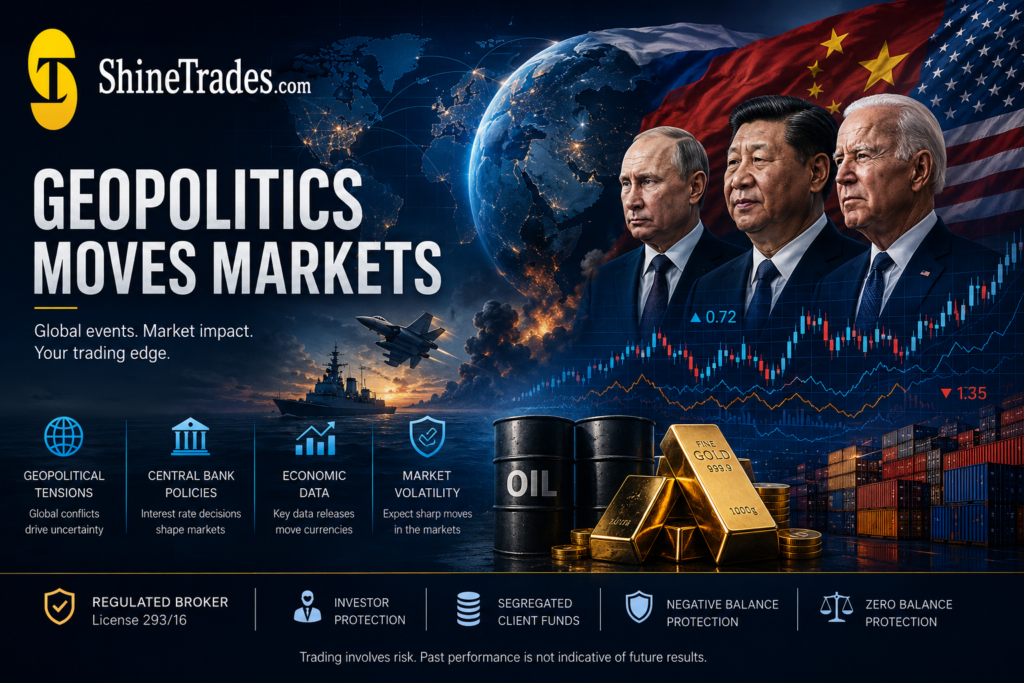
Geopolitical Tensions Reshape Global Markets: An In-Depth Analysis (July 16, 2026)
Global financial markets in mid-2026 operate in a landscape defined by persistent geopolitical friction, energy supply vulnerabilities, and policy uncertainty under the second Trump administration. While major indices hover near highs amid resilient corporate earnings and AI-driven optimism, underlying risks from the Middle East, US-China/EU trade dynamics, and ongoing conflicts create a volatile backdrop. Investors navigate elevated uncertainty with selective resilience.
Market Snapshot: Mixed Performance Amid Caution
As of July 16, 2026:
- US Equities: The S&P 500 trades around 7,500–7,575, the Dow Jones near or above 52,500 (hitting records earlier), and the Nasdaq Composite in the mid-26,000s. Recent sessions show mixed results, with tech facing pressure from rotation and energy sensitivity, while broader indices demonstrate underlying strength. Year-to-date gains remain solid but tempered by periodic pullbacks tied to geopolitical flares.
- Commodities: WTI Crude hovers around $79–80/bbl (up sharply year-over-year), with Brent near $84–85. Prices reflect ongoing Hormuz risks despite partial ceasefires and reopenings.
- Bonds & Yields: The US 10-year Treasury yield sits around 4.55–4.56%, reflecting sticky inflation expectations and policy divergence.
- Currencies: The USD remains influential, with the yuan relatively stable amid broader trade tensions.
Markets have shown resilience to shocks—recovering from earlier 2026 dips linked to Iran conflicts—but volatility persists, with energy and defense sectors outperforming in risk-on periods.
Key Geopolitical Drivers
1. Middle East Flashpoints and Energy Security
The Iran conflict remains the most immediate market mover. Escalations involving the Strait of Hormuz (including tanker incidents and threats to chokepoints) have driven oil rallies, with partial reopenings and security measures providing some relief but not full normalization. Shipping traffic lags pre-conflict levels, sustaining premium pricing and inflation risks for energy importers.
This ties into broader Russia-Ukraine dynamics, where energy flows and sanctions continue influencing European and global prices. Geopolitical risk premia in oil support higher-for-longer inflation outlooks, pressuring central banks and favoring commodities and defense plays. Potential long-lasting effects on commodities, supply chains, and credit conditions remain a concern.
2. US Trade Policy and Transatlantic Strains
The Trump administration’s tariff agenda—despite some court setbacks on broad emergency powers—continues via targeted actions. US-Europe relations face historic strain, with troop drawdown threats from Germany and ongoing auto tariff disputes, even after a July 2025 deal.
This “new normal” of rolling negotiations fosters uncertainty but has not derailed global trade volumes (which hit records). The upcoming USMCA review adds another layer. Businesses adapt through rewiring supply chains rather than outright reversal of globalization.
3. US-China/EU-China Tensions
EU-China relations deteriorate over industrial overcapacity in sectors like EVs, solar, and semiconductors, prompting stronger EU trade defenses. Europe diversifies away from both US security dependence and Chinese economic risks.US-China maintains a fragile equilibrium with planned summits and truces, but structural issues around technology and regional security loom. Europe’s hedging—through new FTAs and partnerships—reflects multipolar maneuvering.
4. Broader Macro Context
Global growth projections remain around 3.0–3.3% for 2026, uneven due to war shocks on energy importers versus AI and technology tailwinds for integrated economies. AI demand buoys certain markets, while fiscal and defense spending rises in Europe amid security concerns.
Sectoral and Regional Implications
- Winners: Energy, defense, commodities, and select industrials benefit from risk premia and reshoring trends. US small-caps and value stocks have seen some rotation, while markets like Japan benefit from diversification flows.
- Losers/Risks: Import-dependent sectors, European industrials facing external competition, and high-valuation tech amid rate sensitivity.
- Emerging Markets: Mixed; commodity exporters gain, while others face capital flow volatility and higher energy costs.
- Europe: Faces lagging growth, higher defense needs, and trade defense measures amid internal political shifts.
Outlook: Resilience with Vigilance
Markets price in short-duration geopolitical flareups, supported by earnings and tech/AI momentum. However, prolonged Hormuz disruptions, tariff escalations, or new fronts could spike volatility, push oil higher, and weigh on growth and inflation balances.
Key Watchpoints:
- Developments in Hormuz shipping and Iran negotiations.
- US tariff implementations and related policy moves.
- Central bank responses, which remain data-dependent.
- Corporate earnings resilience, particularly in AI-exposed areas.
Investment Considerations: Diversification across geographies and sectors remains essential. Geopolitical hedging via commodities, gold, and defense holds appeal in this environment. Long-term, supply chain rewiring and economic nationalism create opportunities for adaptable firms.
This environment rewards scenario planning over point forecasts. While 2026 has delivered volatility, markets have absorbed shocks better than feared—testament to corporate adaptability and policy buffers. Yet downside risks from miscalculation in global hotspots remain material. Investors should stay nimble as geopolitics continues dictating the market narrative.
This analysis is for informational purposes and not investment advice. Markets evolve rapidly—always verify the latest data.