
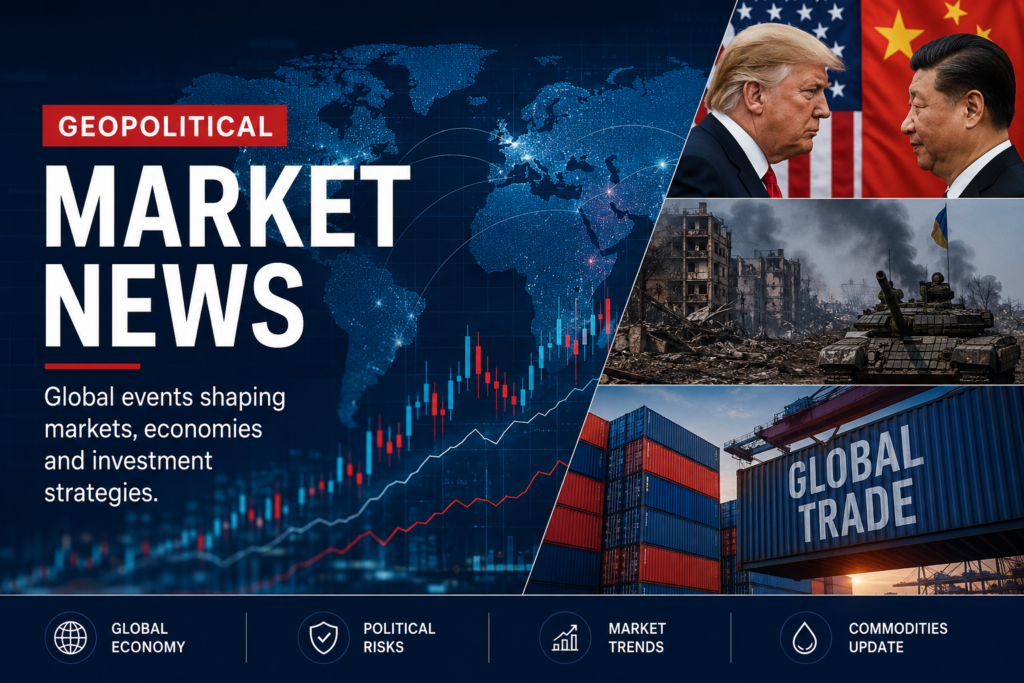
Geopolitical Analysis of Markets: Mid-2026 Outlook
As U.S. markets closed for the Independence Day holiday weekend on July 3, 2026 (observed), Wall Street reflected a resilient but rotating landscape shaped by strong economic data, sector shifts, and lingering geopolitical undercurrents. The Dow Jones Industrial Average climbed nearly 600 points to a record close, while the S&P 500 ended essentially flat and the Nasdaq declined amid tech profit-taking.
This performance capped a positive week for major indices despite mixed signals, highlighting a “rotation trade” favoring cyclical and value stocks over high-flying tech names. Broader markets show cautious optimism amid cooling geopolitical flashpoints but persistent structural risks.
Market Snapshot (Early July 2026)
- Equities: Rotation from tech/growth to industrials, financials, and energy supports the Dow’s outperformance. The S&P 500 and Nasdaq posted weekly gains but face pressure from elevated valuations in AI-related sectors.
- Commodities: Oil prices have eased significantly from earlier 2026 peaks (Brent around $71–72 per barrel recently), reflecting de-escalation signals in the Middle East.
- Safe Havens: Gold remains elevated as a hedge, while Bitcoin trades around $60,000–62,000, showing resilience but sensitivity to risk sentiment.
- Currencies: The U.S. dollar holds steady, supported by relative economic strength.
Key Geopolitical Drivers
Middle East Tensions and Energy Markets: Earlier conflicts involving Iran, including disruptions in the Strait of Hormuz, drove oil spikes, inflation fears, and market volatility. Recent signals of progress in diplomatic talks and partial resumption of flows have eased the risk premium, pulling oil lower. This supports global growth by reducing energy costs but leaves vulnerability to renewed disruptions. Energy sectors benefit from prior highs, while importers in Europe and Asia gain relief.
U.S. Policy and Great Power Competition: The current U.S. administration’s transactional approach—evident in Western Hemisphere actions, tariffs, and regional priorities—continues reshaping trade and alliances. Uncertainties around trade agreements like USMCA add friction for North American supply chains.
U.S.-China dynamics remain competitive, with tariffs, technology restrictions, and critical minerals in focus. Europe finds itself squeezed between the two powers, struggling with competitiveness, fragmented politics, and security burdens.
Europe and NATO: The upcoming NATO Summit underscores alliance strains amid reduced U.S. engagement, ongoing challenges in Ukraine, and populist pressures in key European nations.
Broader Risks: Geoeconomic confrontation, state capitalism, industrial policy, and hybrid threats remain prominent. AI and technology nationalism add further layers of uncertainty.
Economic Backdrop Supporting Markets
Strong jobs data helped fuel recent gains, with rotation indicating broadening participation beyond mega-cap tech. U.S. growth projections for 2026 hover around 2–2.2%, with inflation moderating but still above target in places. Fiscal support, AI investments, and resilient consumer spending provide tailwinds, though high debt levels, potential policy volatility, and geopolitical spillovers pose headwinds.
Global growth remains steady but divergent, with technology and adaptability helping offset trade frictions.
Implications for Investors and Businesses
- Opportunities: Energy and cyclical sectors may continue benefiting from any residual geopolitical premiums or rotation. Diversification into commodities, gold, or defensive plays hedges risks. AI-driven productivity gains offer long-term upside.
- Risks: Renewed Middle East flare-ups could spike oil and inflation. Escalating trade measures or alliance fractures might disrupt supply chains. Markets remain sensitive to U.S. policy shifts.
- Outlook: Markets appear resilient in a higher-volatility environment. The near-term holiday lull gives way to summer focus on earnings, diplomatic developments, and trade timelines. Broadening rallies and easing energy pressures support a constructive but watchful stance into the second half of 2026.
Conclusion: Geopolitics in 2026 remains a tale of de-escalation in spots amid structural fragmentation. U.S. market leadership persists due to economic dynamism and policy agility, but global investors must price in persistent multipolar risks. Vigilance on energy chokepoints, trade negotiations, and alliance cohesion will be key to navigating the months ahead.
This analysis is for informational purposes only and reflects conditions as of early July 2026. Markets and geopolitics can shift rapidly.