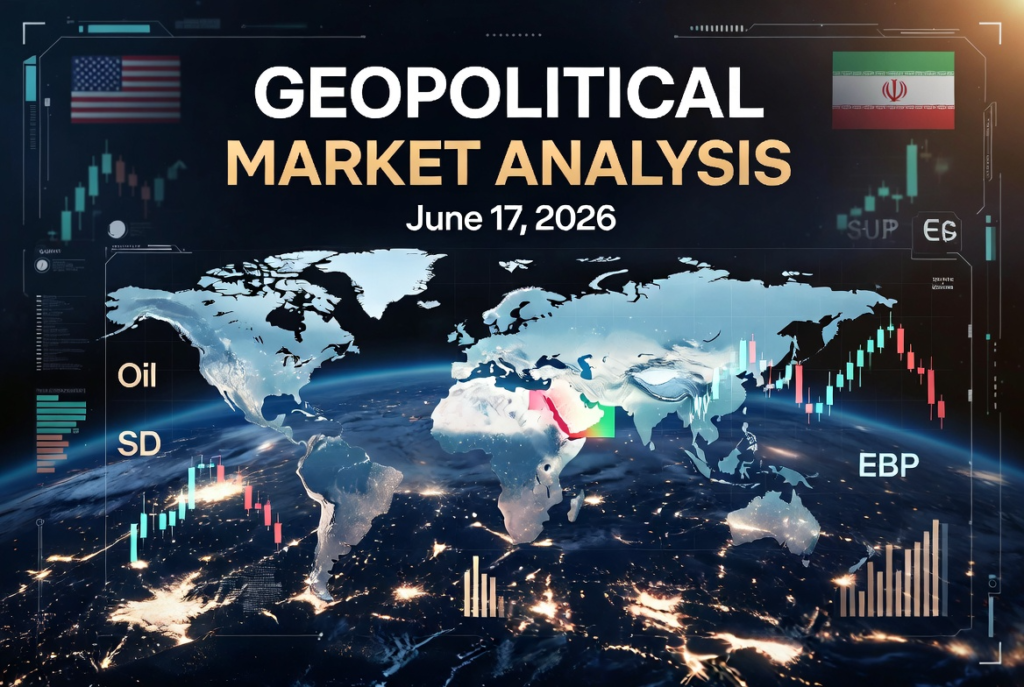
Geopolitical Market Analysis: June 17, 2026
Markets today reflect a cautious optimism driven by de-escalation signals in the Middle East, particularly around a potential U.S.-Iran framework agreement, even as investors digest the Federal Reserve’s ongoing policy meeting and lingering inflationary pressures from earlier energy shocks.
Key Geopolitical Developments
The dominant theme is the U.S.-Iran Memorandum of Understanding (MoU), with a signing expected soon (potentially June 19). This interim deal aims to reopen the Strait of Hormuz—critical for roughly 20% of global oil flows—easing sanctions on Iranian exports and reducing immediate nuclear and regional threats.
- Market Impact: Oil prices have retreated sharply from recent highs. This removes a major risk premium and helps temper inflation concerns.
- Broader Context: G7 leaders welcomed the deal, emphasizing support for diplomacy, while noting ongoing sanctions on Russia related to Ukraine. Tensions with Russia-China-Iran alignments persist but appear contained for now.
- Other notes: Upcoming NATO Summit discussions and regional diplomacy efforts. No major new escalations reported today.
This shift from conflict-driven volatility to potential normalization supports risk assets in the short term but leaves longer-term uncertainties around full implementation, Israeli reactions, and enforcement.Equity MarketsU.S. indices show mixed but resilient performance near record territory:
- Dow Jones recently around 52,000, supported by financials and industrials on lower energy costs and deal optimism.
- S&P 500 hovering in the 7,500 range, with tech providing support but some profit-taking.
- Nasdaq volatile but capable of strong rebounds, reflecting AI/tech strength amid broader rotation.
Volatility (VIX) remains moderate, indicating neither extreme fear nor complacency. Global equities benefit from the energy relief, though European and Asian markets watch U.S. developments closely.
Commodities and Safe Havens
- Oil (WTI/Brent): Down meaningfully, unwinding geopolitical premiums. Further drops possible if the deal solidifies, benefiting consumers and inflation-sensitive sectors.
- Gold: Holding strong above $4,300/oz, acting as a hedge despite easing tensions. Safe-haven demand persists amid inflation worries and central bank buying.
- Bitcoin/Crypto: Trading in a $60k–$67k range for BTC, showing some correlation with risk sentiment.
Monetary Policy: Fed in Focus
The FOMC meeting (June 16-17, with decision and press conference today) under new Chair Kevin Warsh is a pivotal event. Expectations point to rates held steady, with attention on the dot plot, economic projections, and Warsh’s tone.
Elevated May CPI (energy-driven) keeps a hawkish bias possible, but falling oil could open the door for future easing. Markets will parse any shift in forward guidance for clues on cuts or holds.
Outlook and Risks
Bullish Factors: Geopolitical de-risking in energy markets, resilient corporate earnings (especially tech), and potential policy pivot signals.
Bearish/Cautionary Factors: Implementation risks on the Iran deal, persistent core inflation, Fed uncertainty, and broader great-power competition.
Bottom Line: Markets are pricing in relief from Middle East tensions, supporting equities and pressuring oil, while gold and crypto retain appeal as hedges. Today’s Fed communications could set the tone for the near term—watch for any dovish surprises that might fuel a broader risk-on move. Investors should monitor deal follow-through, energy flows, and inflation data. This environment favors selective exposure to cyclicals and tech, with hedges in place for volatility.
This analysis is for informational purposes only and based on publicly available data as of June 17, 2026. Markets move fast—always conduct your own due diligence.