Executive Summary
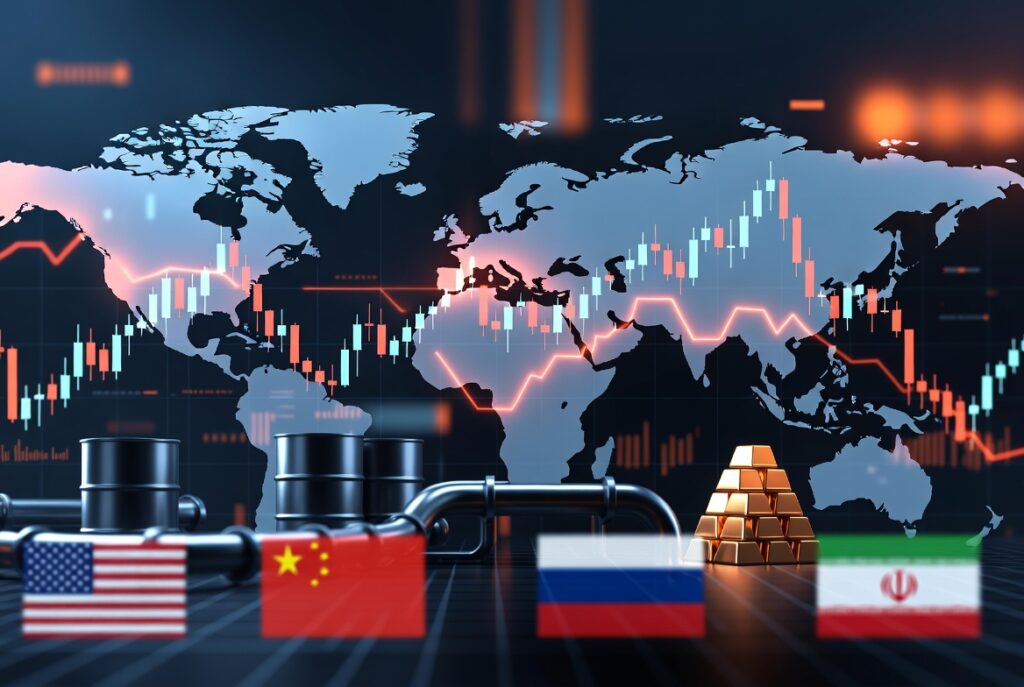
Global markets today reflect cautious optimism amid ongoing Middle East tensions. Oil prices remain elevated due to disruptions in the Strait of Hormuz, while equity markets show resilience, particularly in technology and AI sectors. Investors are closely watching fragile diplomatic efforts involving the US, Iran, Israel, and regional proxies, alongside broader US-China-Russia dynamics.Geopolitical risks remain the dominant theme, with energy supply concerns putting pressure on inflation and global growth forecasts. Short-term volatility is elevated, but longer-term opportunities exist in diversified portfolios favoring technology, defense, and commodities.
Key Geopolitical Developments
Middle East Tensions (Primary Focus):
The 2026 Iran conflict continues to dominate global risk sentiment. Ceasefire efforts in Lebanon and Gaza remain fragile, with reported strikes, responses from Hezbollah, and disruptions in the Strait of Hormuz. Iran has implemented controls on shipping through the area, affecting a significant portion of global oil transit. US-Iran negotiations show intermittent progress but face repeated setbacks linked to regional developments.
Ongoing incidents in southern Lebanon and Gaza, along with involvement from international forces, keep escalation risks elevated. China and Russia continue pushing for de-escalation while strengthening ties with Iran.
US Foreign Policy & Alliances:
The Trump administration is balancing limited direct involvement with diplomatic initiatives. Broader US political developments at home are also being watched for their potential impact on international credibility.
Russia-Ukraine and Eurasia:
The Ukraine conflict continues with incremental Russian advances. Russia is benefiting indirectly from Middle East distractions and deepening cooperation with China and Iran.
Asia & China:
US-China relations remain complex as China positions itself as a potential mediator in the Middle East while advancing its own economic initiatives and currency internationalization. Southeast Asia shows mixed alignments.
Additional factors such as potential climate-related supply risks later in 2026 are also on investors’ radar.
Market Overview & ImpactsEquities:
US indices have reached record levels earlier in June, driven by strength in tech and AI. However, there has been some sector rotation, with pressure on AI and chip stocks. Defense and energy sectors are offering selective opportunities amid the geopolitical backdrop.
Commodities & Energy:
Oil prices have spiked on supply disruption fears but could face longer-term surplus pressures if tensions ease. Gold continues to benefit from safe-haven demand and central bank buying.
Currencies & Bonds:
Geopolitical uncertainty is supporting safe-haven flows into gold and certain currencies, while keeping volatility elevated in the US dollar and other major pairs. Energy-driven inflation concerns persist.
Global Growth Outlook:
Projections for global growth remain modest, with significant downside risks if Middle East disruptions prolong. Higher energy costs could exacerbate inflationary pressures in many economies.
Risk Assessment & Scenarios
- Base Case (Most Likely Short-Term): Fragile ceasefires hold with continued diplomacy; oil volatility moderates; equities grind higher supported by AI and tech earnings.
- Upside Scenario: Rapid de-escalation and resolution of Hormuz issues → sharp relief in oil prices and broad risk-on rally.
- Downside Scenario (High Impact): Renewed major escalations or prolonged chokepoint closures → energy crisis, higher inflation, equity market corrections, and recession risks in vulnerable economies.
Key Risks to Monitor: US-Iran and Israel dynamics, shipping data through critical chokepoints, central bank gold purchases, and upcoming diplomatic meetings.
Investment Implications & Recommendations
- Diversify across growth sectors (tech/AI) while adding hedges in energy, defense, and gold.
- Monitor Oil & Inflation closely — consider commodity-linked assets and inflation-protected securities.
- Currency Caution — favor safe-haven assets during periods of heightened uncertainty.
- Long-Term View — geopolitical fragmentation favors resilient supply chains, domestic production, and innovation-driven companies.
Disclaimer: This analysis is for informational purposes only and does not constitute financial advice. Markets are volatile — always conduct your own research or consult a qualified financial advisor. Past performance is not indicative of future results.