
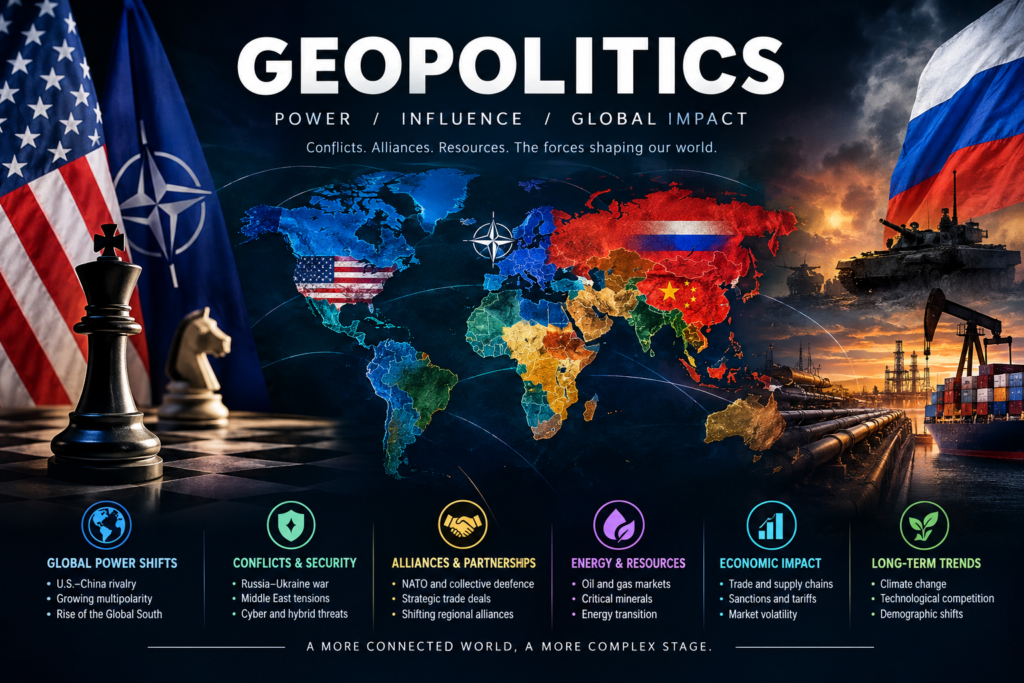
In-Depth Geopolitical and Market Analysis: September 30, 2026
As the third quarter of 2026 closes, global markets and geopolitics remain tightly intertwined, dominated by the protracted U.S.-Iran conflict, elevated energy prices, multi-decade highs in long-term bond yields, and lingering great-power tensions. Consumer confidence in the U.S. has slumped to multi-year lows amid cost-of-living pressures, while central banks grapple with inflation sticky enough to force further tightening in places like Australia. Equity markets show resilience in technology and AI-related names but face broad pressure from higher discount rates. Below is a structured analysis of the key developments shaping today’s landscape.
1. Middle East: The Iran War and Energy Chokepoints Dominate
The defining geopolitical event of 2026 remains the U.S.-Iran conflict, which began earlier this year and has disrupted shipping through the Strait of Hormuz (normally handling roughly a fifth of global oil trade) for months. Indirect talks continue through Qatari mediators. Iran has floated a plan for a phased reopening of the strait within seven days in exchange for an end to hostilities (including in Lebanon), lifting of the U.S. naval blockade, unfreezing of Iranian assets, and sanctions relief on oil. President Trump has publicly claimed the war will end “very soon” while rejecting elements of prior proposals and signaling that intensified military action could resume after the November midterms. The administration has also imposed fresh sanctions on entities in China, Pakistan, Turkey, Iran, and elsewhere accused of supporting Iran’s military supply chain.
A major milestone occurs today: U.S. forces are completing their withdrawal from the last bases in Iraq after more than two decades of presence. This is widely viewed in the region as a strategic gain for Iran and its aligned groups, even as Washington prosecutes the broader conflict with Tehran.
Secondary theaters remain active. Israel conducted an airstrike that killed Izz al-Din al-Beik, head of Hamas’s armed wing in northern Gaza, and settler violence flared in the West Bank. In Yemen, clashes near the Bab al-Mandab Strait between government forces and Houthis have caused dozens of casualties, keeping another critical shipping lane under pressure. Saudi Arabia has resumed some exports via its East-West pipeline, providing limited relief.
Market impact: Oil remains highly sensitive. Brent has traded in a volatile range near or above $100 per barrel in recent weeks (with some sessions around $96–104), well above pre-conflict levels near $70–73. U.S. Strategic Petroleum Reserve releases and any credible de-escalation signals have produced temporary pullbacks, but the geopolitical risk premium persists. Elevated energy costs are feeding into broader inflation and higher interest-rate expectations globally.
2. Europe and Ukraine: Attrition, New Drone Threats, and Food Security Risks
Russia continues intensive strikes on Ukraine. Recent waves of drones and missiles hit Kyiv, including the National Academy of Sciences, killing civilians and damaging infrastructure. Russia’s newer jet-powered Geran drones have reduced Ukrainian interception rates significantly compared with propeller-driven models. President Putin ordered an expansion of Russia’s armed forces by 15,500 personnel, bringing total strength toward 2.44 million.
The blockade of Ukraine’s Black Sea export routes is tightening. Ukrainian officials report grain prices have risen about 25% on average, with broader implications for global food costs—particularly for import-dependent countries in Africa and Southeast Asia. Alternative “solidarity lanes” through the EU (Danube and rail) currently handle 40–45% of exports. The EU is coordinating responses to hybrid threats and Russian sabotage while debating further air-defense support for Kyiv.
Market impact: Food-price inflation risk and energy spillover effects reinforce the higher-for-longer rate narrative in Europe and beyond. Defense-related spending and European energy security concerns remain elevated.
3. U.S.-China Relations and Indo-Pacific Dynamics
A recent Trump-Xi summit in Washington (late September) produced limited concrete breakthroughs but extended a trade truce and included positive economic and trade consultations. Taiwan featured as a sensitive topic; the U.S. has delayed a substantial arms package previously described by Trump as a “negotiating chip.” Beijing continues to press its positions on the island, while broader competition in technology, rare earths, and regional influence persists.
On the Korean Peninsula, South Korea attributed recent DMZ explosions that injured soldiers to North Korean landmines, prompting denials and sharp rhetoric from Pyongyang.
Market impact: Relative stabilization in U.S.-China trade reduces one source of tariff uncertainty, supporting risk assets at the margin. However, any renewed escalation over Taiwan or technology controls would quickly reverse that.
4. Global Markets Snapshot and Macro Backdrop
Equities: U.S. stocks closed slightly lower on September 29 amid rising yields, with the S&P 500 near 7,671, the Dow around 51,350, and the Nasdaq Composite near 26,798. Futures pointed modestly higher overnight. Asian markets were mixed-to-positive, with Japan’s Nikkei gaining notably. Technology and AI names provided selective support—reports of high valuations for Anthropic and AMD’s acquisition of an AI startup offered offsets to the broader yield pressure. For the quarter, major U.S. indexes show modest gains in the S&P and Nasdaq with the Dow lagging.
Bonds and rates: The standout pressure point. The 10-year Treasury yield has climbed near 5.3% (highest since 2007) and the 30-year near 5.6% (highest since 2002). This reflects sticky inflation fears driven by energy costs, strong fiscal deficits, and shifting Fed communications. Australia’s Reserve Bank raised its cash rate 25 basis points to 4.60%—the highest since 2011—explicitly citing inflation above target linked in part to the Iran war’s economic fallout.
Commodities and currencies: Gold has been volatile, recently trading around $4,150–4,160 per ounce. It faces headwinds from higher real rates and a firmer dollar even as geopolitical risks remain elevated. The dollar has strengthened, with the euro under pressure. Consumer confidence data showed a sharp drop, reflecting household strain from prices and rates.
AI and growth themes: Despite macro headwinds, private AI valuations and deal activity remain robust, illustrating a bifurcation between rate-sensitive cyclical assets and long-duration growth stories.
Outlook and Key Risks
Near-term markets will hinge on three variables:
- Iran diplomacy vs. escalation: A credible deal reopening Hormuz would likely ease oil prices, reduce inflation pressure, and support risk assets and gold (via lower rates). Continued stalemate or renewed intensive strikes keeps the energy and yield shock alive.
- U.S. data and midterms: Upcoming inflation and labor figures will influence Fed path expectations. Political uncertainty ahead of November elections adds a layer of volatility.
- Secondary theaters: Any sharp deterioration in Ukraine grain exports, Houthi disruption of Red Sea shipping, or Indo-Pacific incidents could amplify commodity and risk-off moves.
Base case: Elevated but range-bound oil, high but potentially stabilizing long-term yields if inflation data cooperates, and equity markets that remain selective—favoring quality growth and defensives over pure cyclicals. Downside risks center on a prolonged or intensified Middle East conflict that pushes energy prices higher and forces more aggressive global tightening. Upside would require tangible de-escalation that allows real yields to ease without a growth collapse.
In summary, September 30, 2026, finds the world navigating the economic aftershocks of a major energy-security crisis layered on top of ongoing great-power competition. Markets are pricing higher structural rates and geopolitical risk premiums; any genuine breakthrough on the Iran front would be the single most market-moving event in the near term. Investors should watch Hormuz shipping data, U.S. Treasury auctions and inflation prints, and diplomatic channels closely in the days ahead.
This analysis reflects conditions as of early September 30th, 2026. The analysis is for informational and educational purposes. Market conditions change rapidly—always conduct your own due diligence or consult a financial advisor.